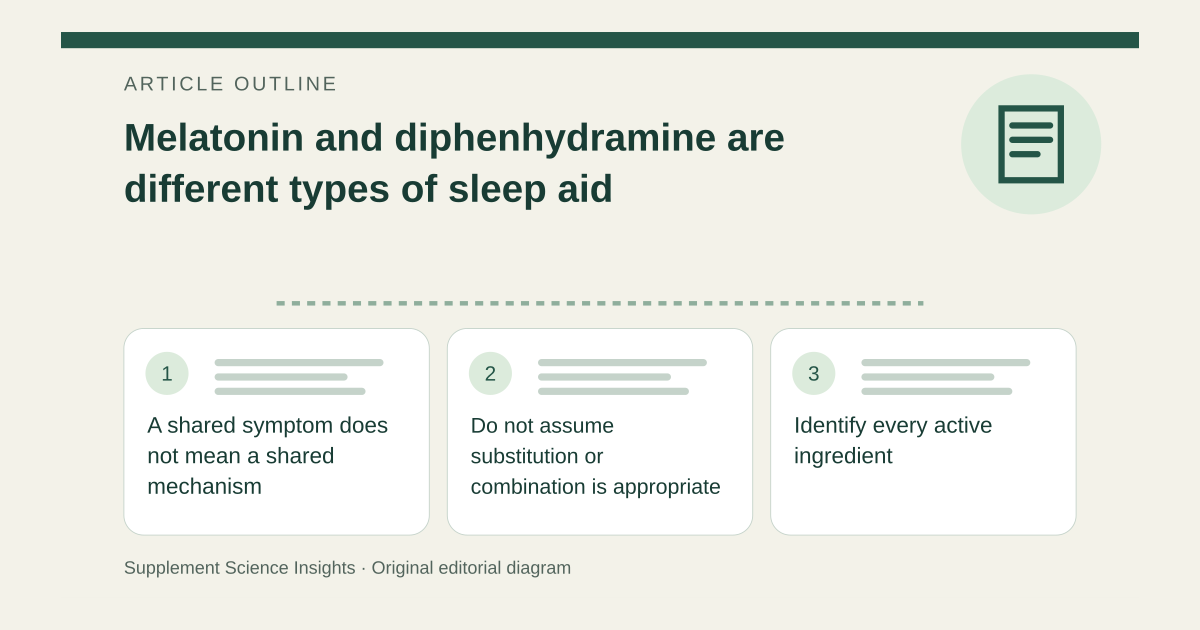
A shared symptom does not mean a shared mechanism
NHS describes diphenhydramine as an antihistamine used for allergy symptoms and some short-term sleep problems. Melatonin belongs to a different biological and therapeutic category. [1][2]
The active ingredient should be identified even when both packages use night-time or sleep-related branding. Combination cold medicines can contain additional ingredients as well. [1][2]
Do not assume substitution or combination is appropriate
Changing from one substance to the other is not a simple milligram-for-milligram exchange. The indication, formulation and other medicines affect suitability. [1][2]
Ask a pharmacist or clinician before combining sleep-related products. Similar intended effects do not establish that taking both improves sleep or that the combination is appropriate for a particular person. [1][2]
Identify every active ingredient
Imagine a night-time cold product already contains diphenhydramine. Its combination ingredients must be considered before adding a separate sleep product.
| Detail | Interpretation |
|---|---|
| Melatonin | Hormone-related agent |
| Diphenhydramine | Sedating antihistamine |
| Night-time branding | Does not identify the full formula |
Sources for this article
- About melatonin - NHS
Source consulted: 2026-09-18. This is a reference resource, not a claim that we conducted the studies or tested a product. - About diphenhydramine - NHS
Source consulted: 2026-09-18. This is a reference resource, not a claim that we conducted the studies or tested a product.