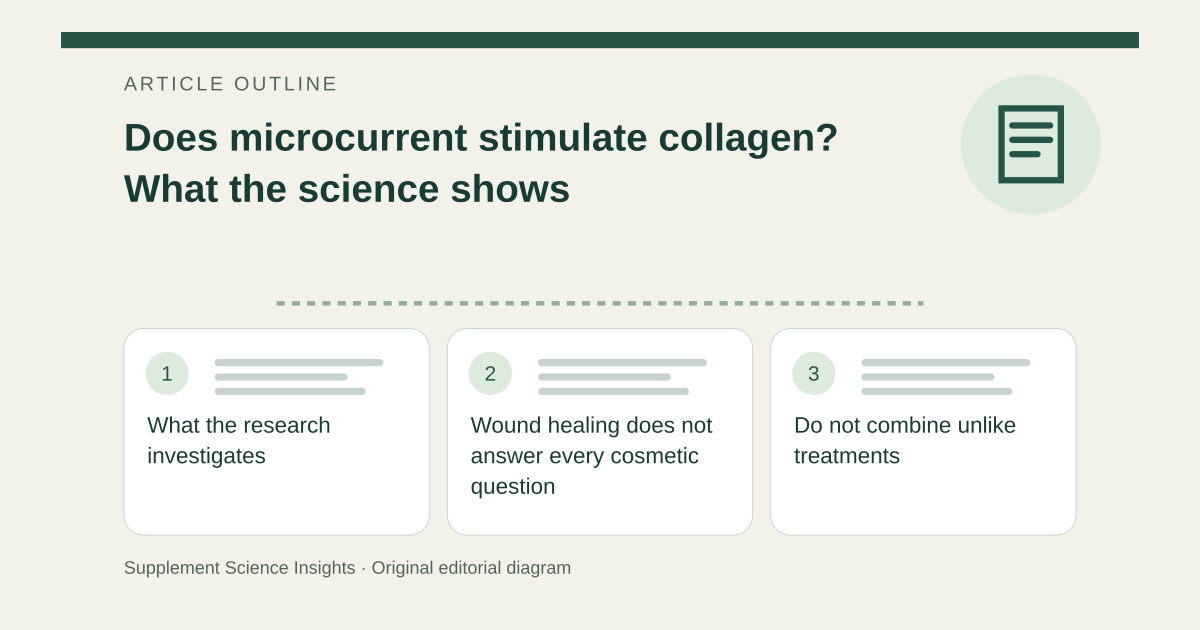
What the research investigates
A 2024 narrative review describes very low electrical currents and potential effects on cellular signaling, tissue repair and matrix production. It brings together diverse experimental and therapeutic applications. It is not a pooled proof that every consumer facial device delivers the same benefit. [1]
Wound healing does not answer every cosmetic question
Injured tissue, cultured cells and normal aging facial skin are different settings. A change in a laboratory collagen signal or a wound outcome cannot establish the size or durability of a cosmetic improvement in healthy users. Independent controlled studies of the actual device are more informative. [1]
Do not combine unlike treatments
Microcurrent, radiofrequency, ultrasound and laser procedures use different forms of energy. Their settings and safety requirements cannot be exchanged. Follow the particular device instructions and seek professional advice about contraindications rather than increasing intensity to pursue a stronger effect. [1]
Judge an offer by measurable results
Imagine a device advertisement cites cell-energy research but shows only immediate before-and-after photographs. Ask for a controlled human study, follow-up after treatment ends and a relevant skin endpoint. The mechanism alone does not establish sustained collagen rebuilding. [1]
| Claim | Interpretation |
|---|---|
| Cell response | Mechanistic evidence |
| Wound study | Different clinical context |
| Lasting facial lift | Needs device-specific human evidence |
Sources for this article
- Bioelectric medicine: unveiling the therapeutic potential of micro-current stimulation - PMC
Source consulted: 2026-09-21. This is a reference resource, not a claim that we conducted the studies or tested a product.