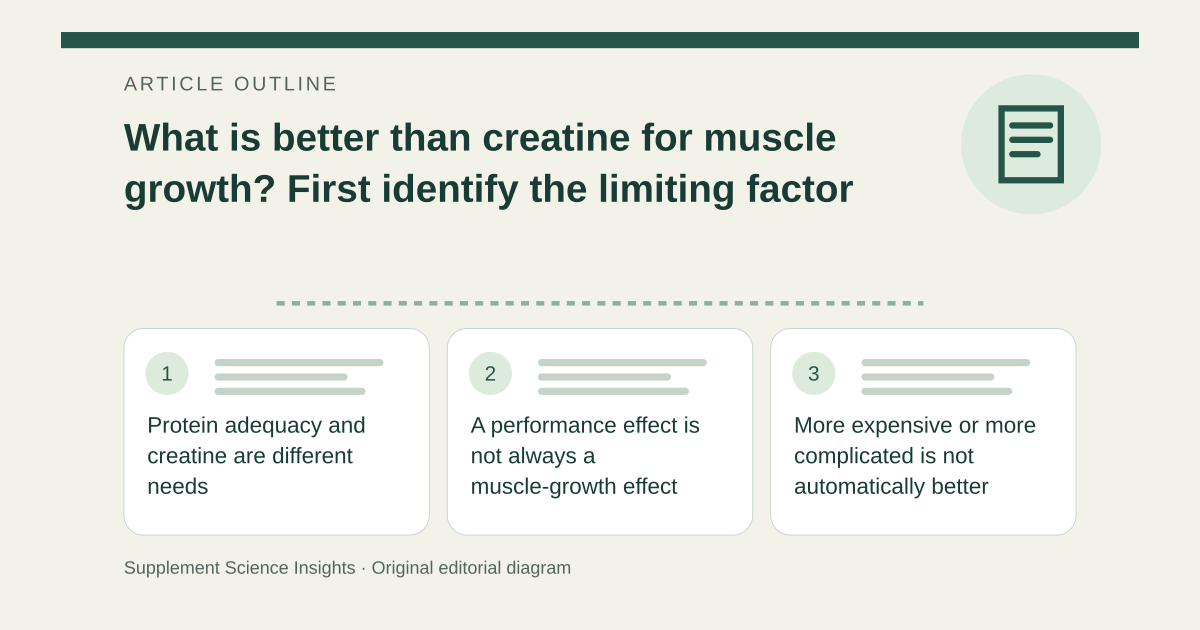
Protein adequacy and creatine are different needs
NIH ODS describes adequate energy and protein as foundations of athletic nutrition. Protein supplies amino acids for tissue maintenance and adaptation. Creatine supports short, intense efforts through a different energy-system role; it is not a substitute for dietary protein or an adequate training stimulus. [1]
A performance effect is not always a muscle-growth effect
Caffeine may affect exercise performance, while other ingredients target specific activities or recovery measures. Feeling more stimulated or completing an endurance task is not the same outcome as gaining muscle tissue. Compare actual outcomes instead of assuming every ergogenic aid is a direct creatine replacement. [1]
More expensive or more complicated is not automatically better
ODS identifies creatine monohydrate as the most studied form and describes limits in evidence for marketed alternatives and ingredient combinations. A blend’s number of ingredients does not establish superior hypertrophy, safety or value. [1]
Choose the next step based on the gap
Imagine a lifter has inconsistent training and inadequate protein intake. Fixing those gaps addresses different needs from changing creatine brands. Someone with those foundations in place should compare evidence for the intended outcome, tolerability and health context rather than seeking an all-purpose stronger supplement. [1]
| Gap or goal | Relevant response |
|---|---|
| Low protein intake | Improve dietary protein adequacy |
| Short repeated high-intensity efforts | Assess creatine evidence |
| Persistent fatigue or poor recovery | Review training, food, sleep and health |
Sources for this article
- Dietary Supplements for Exercise and Athletic Performance - Health Professional Fact Sheet
Source consulted: 2026-09-21. This is a reference resource, not a claim that we conducted the studies or tested a product.