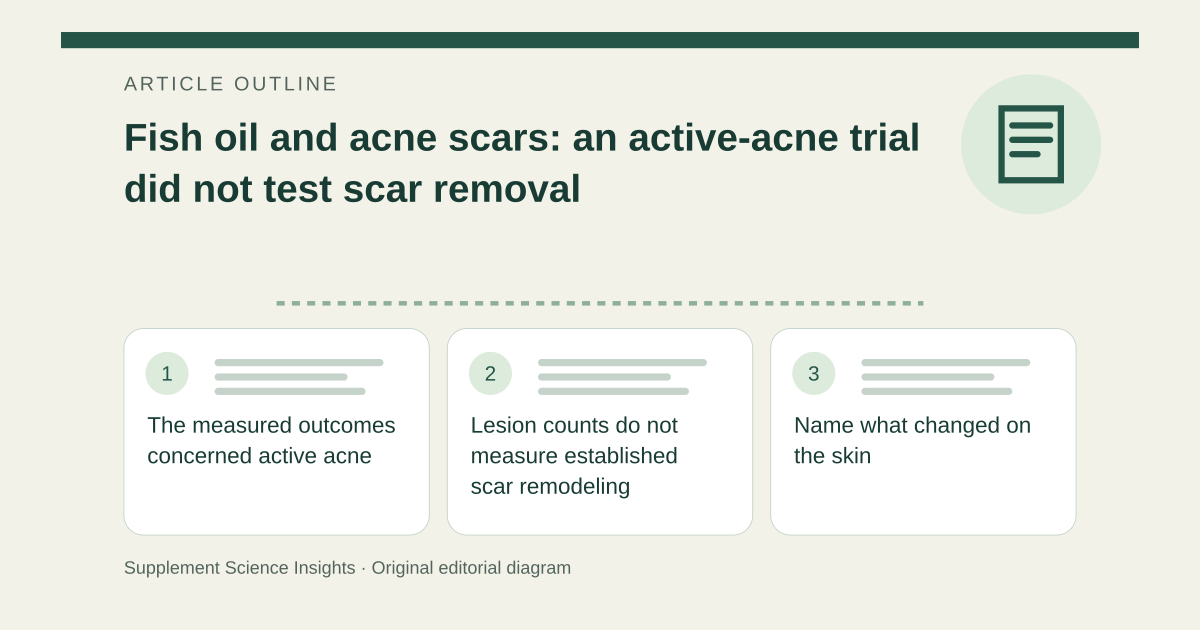
The measured outcomes concerned active acne
Forty-five people with mild-to-moderate acne entered a ten-week randomized trial. Groups received EPA/DHA, a gamma-linolenic-acid preparation or a control condition. [1]
The report described reductions in inflammatory and non-inflammatory lesions in the supplemented groups, with supporting changes in inflammatory tissue findings. Those measurements concern current acne activity. [1]
Lesion counts do not measure established scar remodeling
The study did not demonstrate removal of pitted scars, raised scars or persistent post-acne color changes. It also studied oral supplementation, not direct application of capsule contents to skin. [1]
No severe adverse effects were reported, but the small sample and short follow-up cannot establish universal safety or durable benefit. Funding and conflicts were not established from the abstract. The findings are preliminary and should not be used to promise scar correction or replace a dermatologic assessment of the actual skin concern. [1]
Name what changed on the skin
Imagine fewer new inflamed spots appear during a study. That does not establish that scars left by earlier acne became shallower or disappeared.
| Detail | Interpretation |
|---|---|
| Active lesion count | Studied outcome |
| Established scars | Not measured |
| Topical capsule oil | Not tested |
Sources for this article
- Effect of dietary supplementation with omega-3 fatty acid and gamma-linolenic acid on acne vulgaris: a randomised, double-blind, controlled trial - PubMed
Source consulted: 2026-09-19. This is a reference resource, not a claim that we conducted the studies or tested a product.