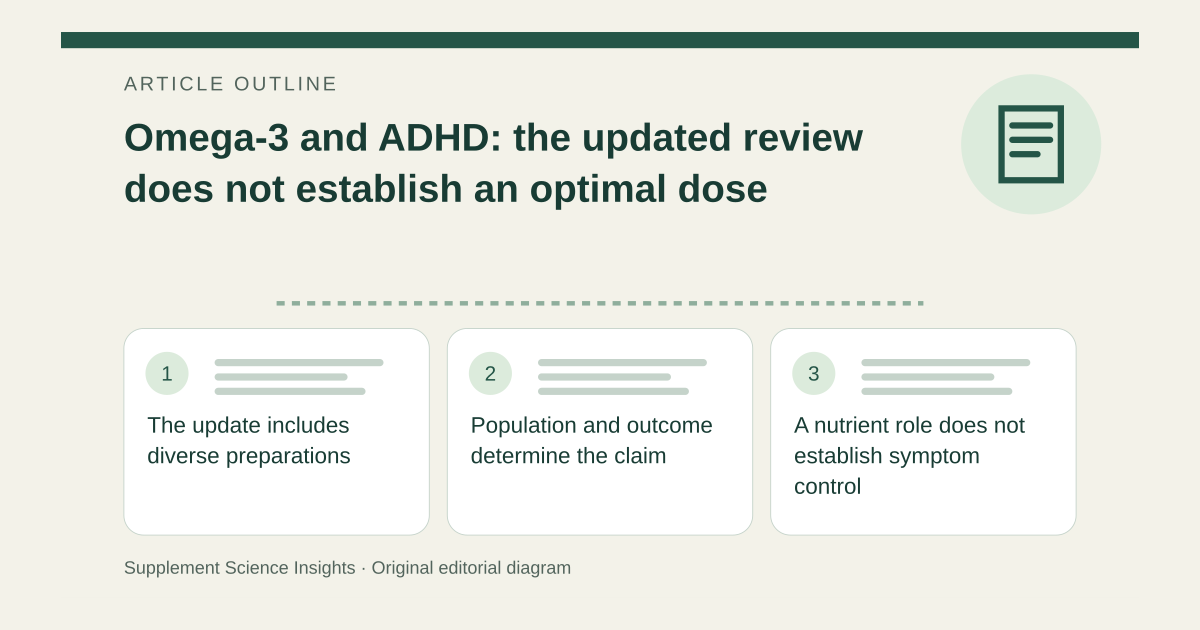
The update includes diverse preparations
Cochrane included 37 trials involving more than 2,374 children and adolescents. The preparations included different fatty-acid combinations, doses and co-interventions. Most evidence did not show improvement in core symptoms such as inattention or hyperactivity-impulsivity. [1]
Some analyses suggested improvement, but confidence in that finding was low. The review’s limitations included small studies, variable eligibility, different formulations and short follow-up. A positive subgroup should not replace the overall uncertainty. [1]
Population and outcome determine the claim
This review concerns children and adolescents, not an adult dose-finding program. It cannot justify an optimal adult amount by scaling a pediatric supplement according to body weight. [1]
Fatty acids have normal roles in brain development, but that physiology does not establish a supplement treatment for ADHD. Continue an evidence-based assessment and care plan rather than substituting a product on the basis of a brain-health claim. [1]
A nutrient role does not establish symptom control
Imagine a label cites the brain’s need for fatty acids to promise better attention. The clinical question still requires evidence of symptom improvement with that preparation in the relevant population.
| Detail | Interpretation |
|---|---|
| 37 trials | Diverse interventions |
| Pediatric evidence | Not an adult dosing rule |
| Brain physiology | Not proof of treatment |
Sources for this article
- Cochrane: PUFA supplements for ADHD in children and adolescents
Source consulted: 2026-09-17. This is a reference resource, not a claim that we conducted the studies or tested a product.