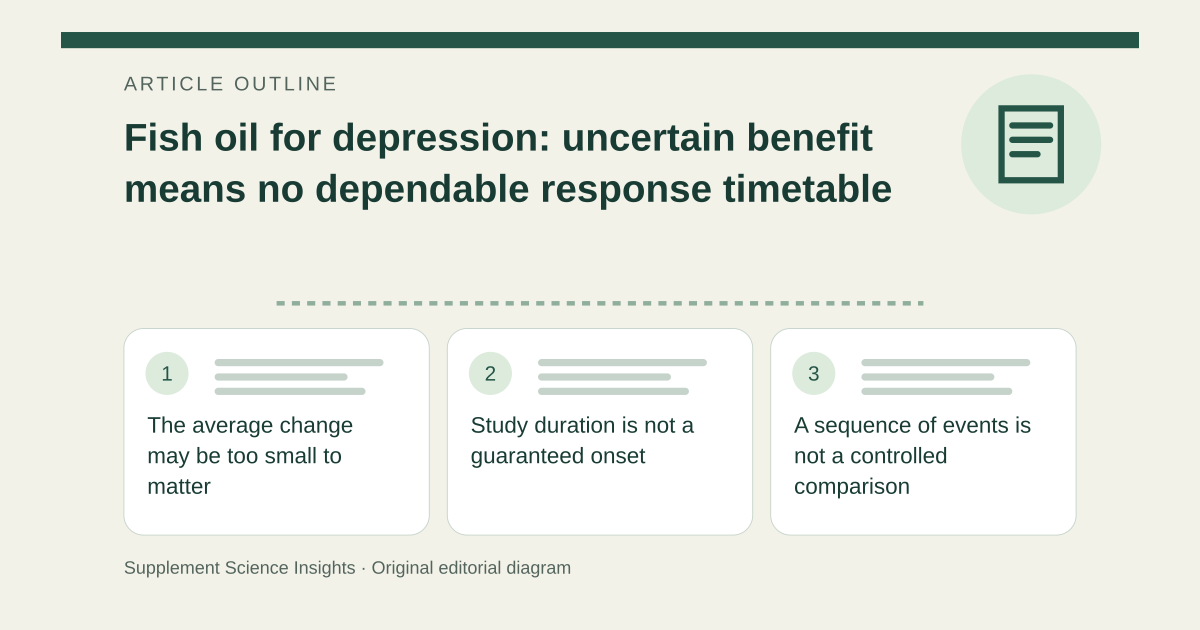
The average change may be too small to matter
The 2021 Cochrane review included 35 studies in adults with major depressive disorder. It found a small-to-modest average symptom difference compared with placebo, but judged the evidence low to very low certainty and the effect unlikely to be clinically meaningful. [1]
Study findings varied, and the review could not confidently establish adverse effects or differences in study completion. This is the review’s assessment, not a new independent analysis of the trials. [1]
Study duration is not a guaranteed onset
The time participants spend in a trial does not establish when a particular person will improve. It also does not prove that an apparent change after starting a supplement was caused by it. [1]
Do not replace or delay depression care while waiting for a supplement deadline. Discuss any proposed omega-3 addition with the treating clinician, including current medicines and what outcome would actually be monitored. [1]
A sequence of events is not a controlled comparison
Imagine mood improves several weeks after starting fish oil while therapy and sleep also change. The timing alone cannot isolate the supplement’s effect or predict another person’s response.
| Detail | Interpretation |
|---|---|
| Small average difference | May lack clinical importance |
| Low certainty | Limits confidence |
| Weeks of use | Not a guaranteed response |
Sources for this article
- Cochrane: Omega-3 fatty acids for depression in adults
Source consulted: 2026-09-17. This is a reference resource, not a claim that we conducted the studies or tested a product.