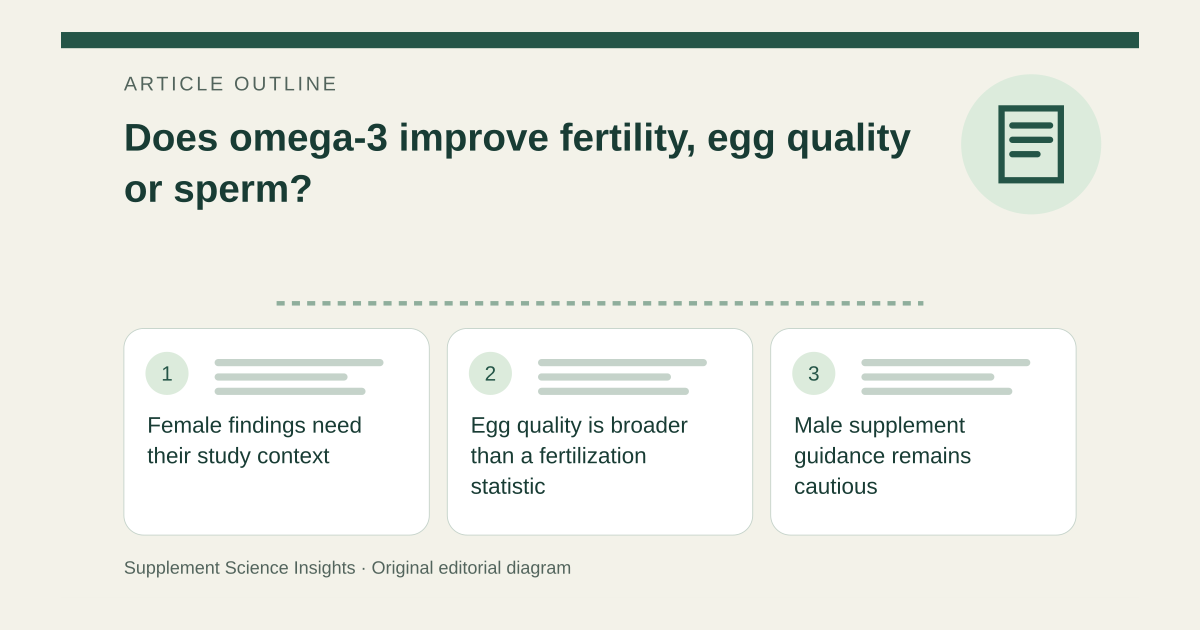
Female findings need their study context
A 2024 review reported favorable pregnancy and fertilization findings across dietary or supplemental omega-3 studies, including assisted reproduction. Heterogeneity was high, and the authors called for further prospective randomized research. The abstract does not establish a single retail product or optimal regimen. [1]
Egg quality is broader than a fertilization statistic
A change in fertilization rate cannot by itself establish better chromosome status, a live-birth benefit or reversal of age-related fertility changes. Food intake and supplement interventions also should not be treated as equivalent exposures. [1][2]
Male supplement guidance remains cautious
The inspected AUA/ASRM guideline describes the clinical usefulness of vitamins and antioxidant supplements as uncertain and does not recommend a specific agent for male infertility. A semen-marker change would not automatically establish a higher chance of pregnancy. [3]
Coordinate nutritional decisions with the fertility plan
Imagine one partner wants fish oil before IVF while the other has an abnormal semen analysis. Those are related but different clinical questions. Bring the exact products and goals to the treating team without delaying recommended testing or treatment. [1][3]
| Question | Evidence boundary |
|---|---|
| Fertilization rate | Not the same as live birth |
| Semen marker | Not a pregnancy guarantee |
| Food association | Not an identical supplement effect |
| Fertility treatment | Coordinate the full plan |
Sources for this article
- Effect of omega-3 supplements or diets on fertility in women: A meta-analysis.
Source consulted: 2026-09-21. This is a reference resource, not a claim that we conducted the studies or tested a product. - Dietary Supplements: What You Need to Know
Source consulted: 2026-09-21. This is a reference resource, not a claim that we conducted the studies or tested a product. - AUA/ASRM Male Infertility Guideline, amended 2024
Source consulted: 2026-09-21. This is a reference resource, not a claim that we conducted the studies or tested a product.