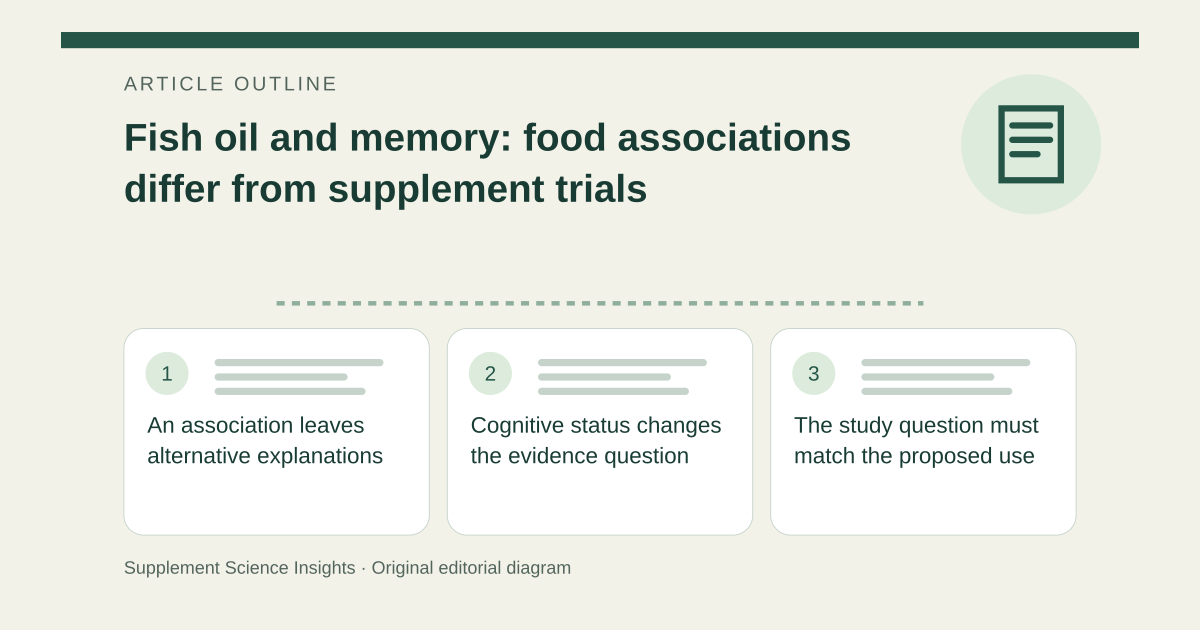
An association leaves alternative explanations
ODS describes observational associations involving fish intake or fatty-acid measures, alongside inconsistent findings over longer follow-up. Diet, health and other differences between people can contribute to such associations. [1]
Randomized supplement trials address a different question: whether assignment to a particular EPA or DHA preparation changes outcomes compared with a control. A food association cannot be treated as a trial of a capsule. [1]
Cognitive status changes the evidence question
The ODS summary describes trials without cognitive benefit in older adults who had no impairment and trials that did not slow decline in established Alzheimer disease. It also describes smaller or subgroup findings in mild impairment that leave uncertainty. [1]
Prevention in healthy adults, change in a memory test and treatment of diagnosed dementia are distinct outcomes. A brain-health marketing phrase should not combine them into one established benefit or replace assessment of new cognitive symptoms. [1]
The study question must match the proposed use
Imagine a cohort study links fish consumption with lower dementia incidence. It cannot establish that a fish-oil product will reverse memory problems in a person already diagnosed with dementia.
| Detail | Interpretation |
|---|---|
| Fish-intake cohort | Association |
| Capsule trial | Assigned intervention |
| Cognitive stage | Relevant to applicability |
Sources for this article
- Omega-3 Fatty Acids - Health Professional Fact Sheet
Source consulted: 2026-09-17. This is a reference resource, not a claim that we conducted the studies or tested a product.