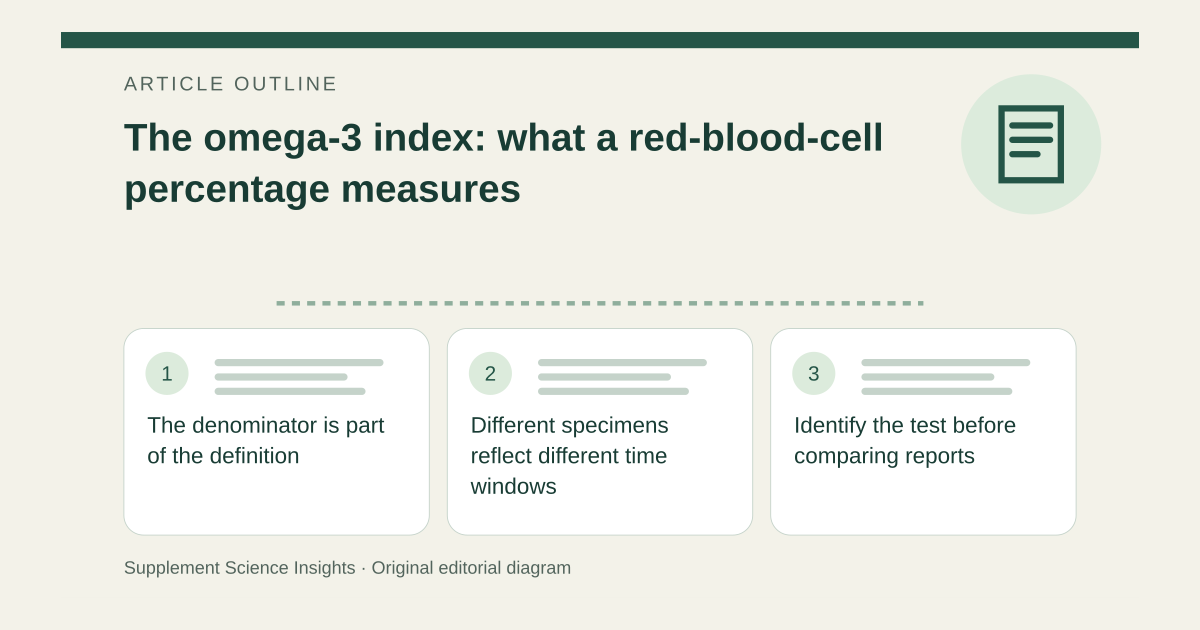
The denominator is part of the definition
ODS describes the omega-3 index as EPA plus DHA in red-blood-cell membranes, expressed as a percentage of total red-blood-cell fatty acids. It is not the percentage of a person’s diet that comes from fish or the number of milligrams taken daily. [1]
Keeping the specimen and denominator attached prevents comparisons between unlike measurements. A plasma fatty-acid percentage and an erythrocyte index are not simply interchangeable numbers. [1]
Different specimens reflect different time windows
Plasma or serum fatty-acid values can vary with recent meals. Red-blood-cell measurements reflect longer-term intake over roughly the preceding 120 days, according to the ODS summary. [1]
That longer window makes the index a possible indicator of tissue fatty-acid status. It does not establish the cause of a symptom or prove that changing the number will produce a particular clinical benefit. [1]
Identify the test before comparing reports
Imagine two laboratory reports each display an omega-3 percentage, but one uses plasma and the other red blood cells. The same printed percentage would not make the tests equivalent.
A useful comparison keeps the specimen, measured fatty acids, method and laboratory interpretation beside the result. A capsule count cannot be read directly from either percentage.
| Detail | Interpretation |
|---|---|
| EPA plus DHA | The numerator |
| Total red-cell fatty acids | The index denominator |
| A plasma percentage | A different specimen context |
Do not turn a status marker into a universal treatment target
ODS notes that normal ranges for omega-3 status measures have not been established universally. Population averages in its discussion are descriptions, not diagnostic cutoffs for every individual. [1]
This page does not prescribe a target index, a testing interval or a dose adjustment. Those claims require evidence and clinical context beyond defining the measurement. [1]
Sources for this article
- NIH ODS: Omega-3 Fatty Acids
Source consulted: 2026-09-17. This is a reference resource, not a claim that we conducted the studies or tested a product.