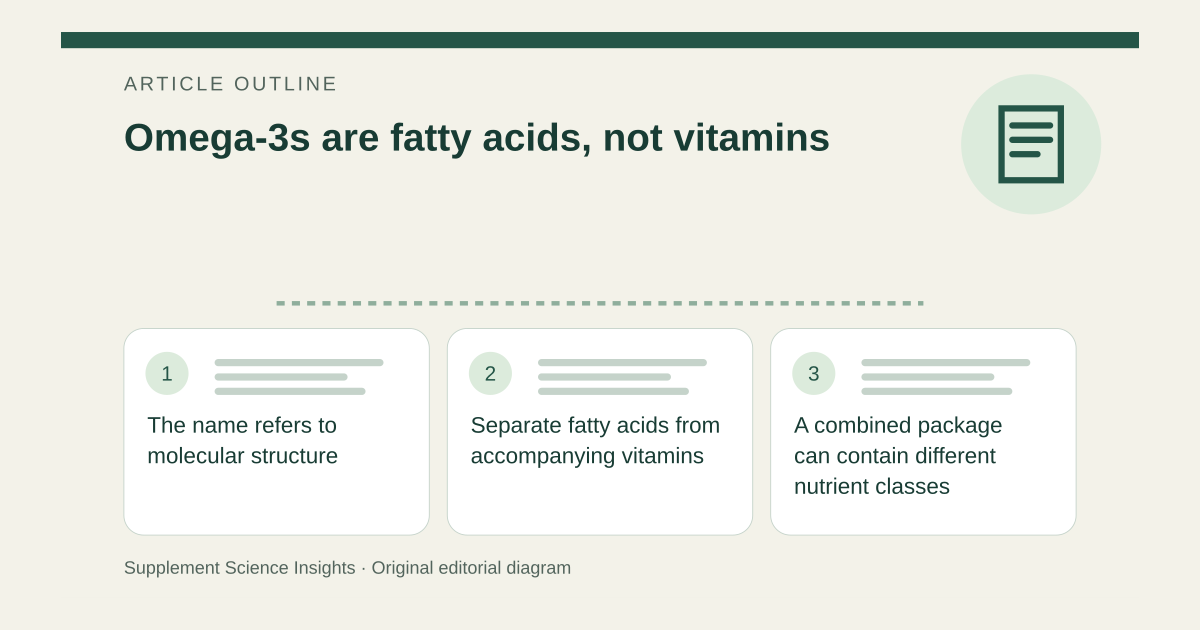
The name refers to molecular structure
NIH ODS explains that omega-3 fatty acids have a double bond three carbons from the methyl end of the chain. ALA, EPA and DHA are examples with different chain lengths and numbers of double bonds. [1]
The structural category does not depend on whether the nutrient comes from a food, an oil or a capsule. Packaging does not change a fatty acid into a vitamin. [1]
Separate fatty acids from accompanying vitamins
A combination preparation may supply omega-3s alongside other nutrients. Each component needs its own identity and amount; one label number does not automatically represent them all. [1]
Likewise, a vitamin product does not necessarily supply omega-3s unless the relevant ingredient is actually present. Read the composition rather than inferring it from a shared supplement aisle or health claim. [1]
A combined package can contain different nutrient classes
Imagine one capsule contains vitamin D and fish oil. The vitamin remains a vitamin, while the oil’s EPA and DHA remain fatty acids.
| Detail | Interpretation |
|---|---|
| Omega-3 | Fatty-acid family |
| Vitamin D | Different nutrient class |
| Combination product | Check each component |
Sources for this article
- Omega-3 Fatty Acids - Health Professional Fact Sheet
Source consulted: 2026-09-18. This is a reference resource, not a claim that we conducted the studies or tested a product.