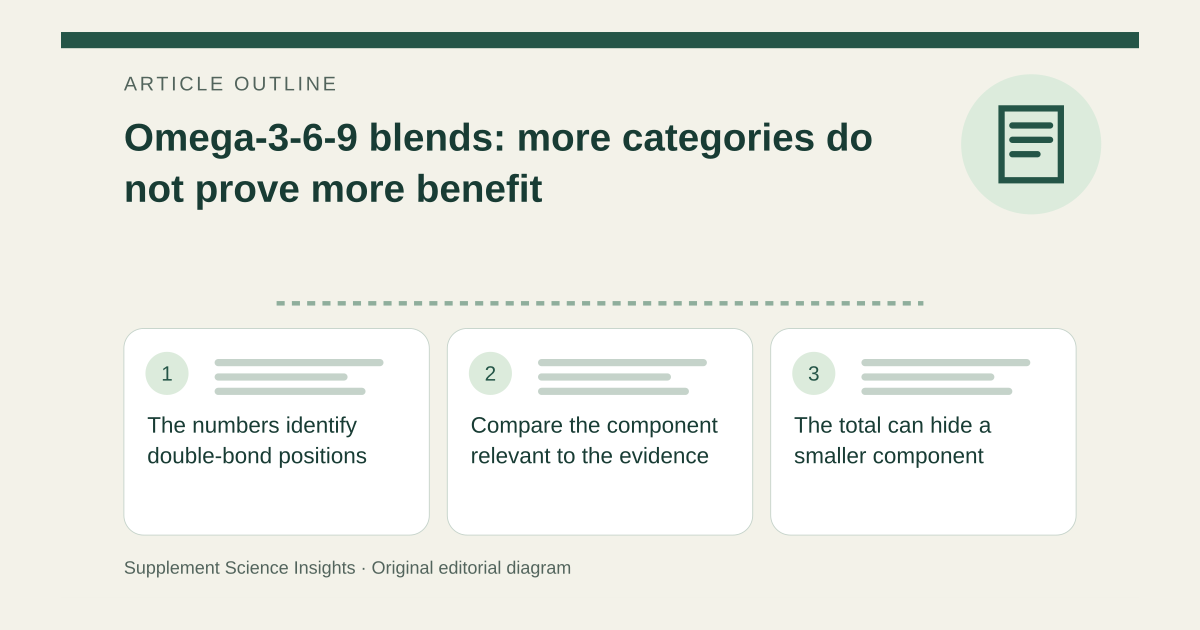
The numbers identify double-bond positions
Omega terminology locates a double bond relative to the methyl end of a fatty-acid chain. Oleic acid is an example of an omega-9 fatty acid; its structure differs from the omega-3s EPA and DHA. [1][2]
These names do not denote sequential vitamin grades or a strength scale. A blend can contain several chemically different components. [1][2]
Compare the component relevant to the evidence
Read the amounts of the individual fatty acids rather than treating total blend weight as EPA plus DHA. Adding other oils can change the fraction of the serving represented by those components. [1][2]
Evidence for one defined omega-3 intervention does not automatically verify the mixed formula. More categories on the front label are not proof of better clinical results. [1][2]
The total can hide a smaller component
Imagine a 1,000 mg blend contains only 200 mg of its declared omega-3 component. The total blend number should not be reported as 1,000 mg omega-3.
| Detail | Interpretation |
|---|---|
| 3, 6 and 9 | Structural categories |
| Blend weight | Sum of components |
| Relevant component | Compare its actual amount |
Sources for this article
- Omega-3 Fatty Acids - Health Professional Fact Sheet
Source consulted: 2026-09-18. This is a reference resource, not a claim that we conducted the studies or tested a product. - oleic acid (CHEBI:16196)
Source consulted: 2026-09-18. This is a reference resource, not a claim that we conducted the studies or tested a product.