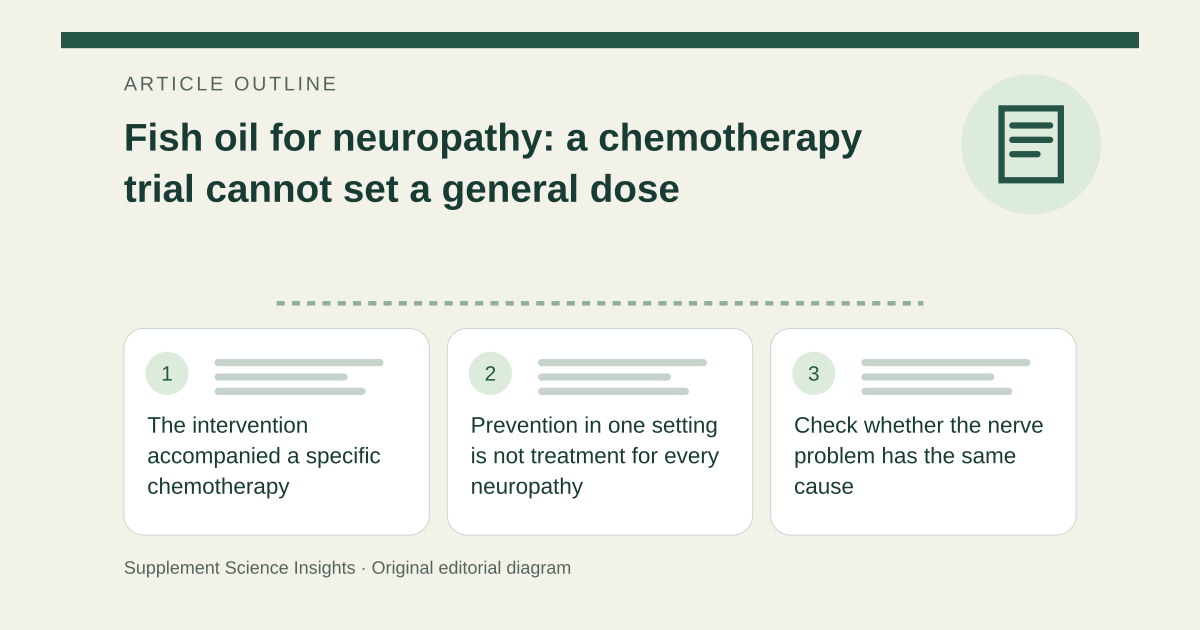
The intervention accompanied a specific chemotherapy
Women receiving paclitaxel for breast cancer were randomized to omega-3 capsules or placebo during chemotherapy and for one month afterward. The reported analysis included 30 active-treatment and 27 placebo participants. [1]
Seventy percent of the omega-3 group and about 41% of controls did not develop peripheral neuropathy. The incidence comparison was significant; the severity comparison was described as a nonsignificant trend. [1]
Prevention in one setting is not treatment for every neuropathy
The trial was small and examined prevention around paclitaxel exposure, not reversal of longstanding neuropathy from other causes. Its capsule regimen is not a personal dosing recommendation. [1]
Funding and conflicts were not established from the abstract. People receiving chemotherapy should review supplements with their oncology team, since the overall treatment context matters. New numbness, pain or weakness also requires assessment of its cause rather than assuming this trial identifies an appropriate supplement. [1]
Check whether the nerve problem has the same cause
Imagine a trial concerns a chemotherapy side effect. Applying its result to a compressed nerve would change the mechanism, population and treatment question.
| Detail | Interpretation |
|---|---|
| Paclitaxel-associated neuropathy | Specific context |
| 57 in reported comparison | Small analysis |
| General neuropathy dose | Not established |
Sources for this article
- Omega-3 fatty acids are protective against paclitaxel-induced peripheral neuropathy: a randomized double-blind placebo controlled trial - PubMed
Source consulted: 2026-09-19. This is a reference resource, not a claim that we conducted the studies or tested a product.