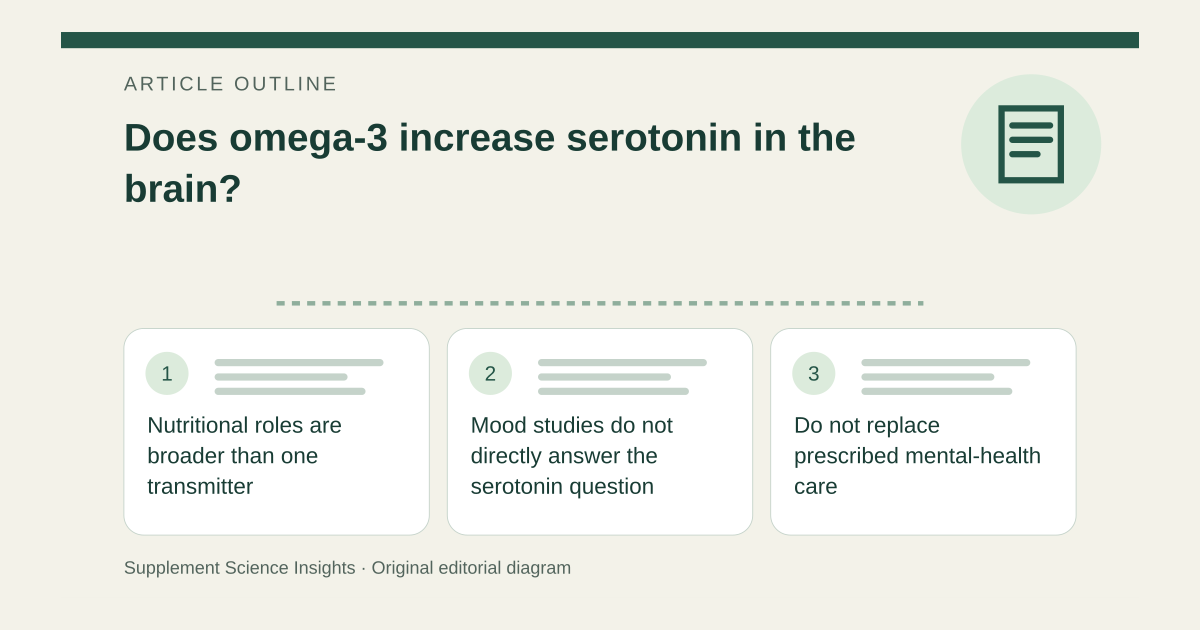
Nutritional roles are broader than one transmitter
DHA is an important component of cell membranes, including in neural tissue. A normal structural role does not establish that adding more consistently increases a particular neurotransmitter or improves mood in every person. [1]
Mood studies do not directly answer the serotonin question
NCCIH describes uncertain or differing results for several omega-3 mental-health uses. Even if a study finds a symptom change, that alone cannot show which brain pathway changed or supply a personal serotonin target. [2]
Do not replace prescribed mental-health care
Persistent mood or anxiety symptoms deserve assessment and an appropriate treatment plan. Review supplements alongside prescribed medicines rather than assuming that fish oil is an equivalent antidepressant or a reason to alter a prescription. [3][4]
Choose an outcome that can actually be assessed
Imagine someone feels calmer after changing diet, sleep and fish oil together. That experience cannot isolate the capsule or demonstrate higher brain serotonin. Discuss meaningful symptom and function changes within the care plan. [2][3]
| Claim or observation | Interpretation |
|---|---|
| DHA in membranes | Normal biological role |
| Mood improvement | Not a serotonin measurement |
| Several changes together | Cause cannot be isolated |
| Persistent symptoms | Appropriate assessment |
Sources for this article
- Omega-3 Fatty Acids - Health Professional Fact Sheet
Source consulted: 2026-09-21. This is a reference resource, not a claim that we conducted the studies or tested a product. - Omega-3 Supplements: What You Need To Know | NCCIH
Source consulted: 2026-09-21. This is a reference resource, not a claim that we conducted the studies or tested a product. - Mental Health Medications - National Institute of Mental Health (NIMH)
Source consulted: 2026-09-21. This is a reference resource, not a claim that we conducted the studies or tested a product. - Dietary Supplements: What You Need to Know
Source consulted: 2026-09-21. This is a reference resource, not a claim that we conducted the studies or tested a product.