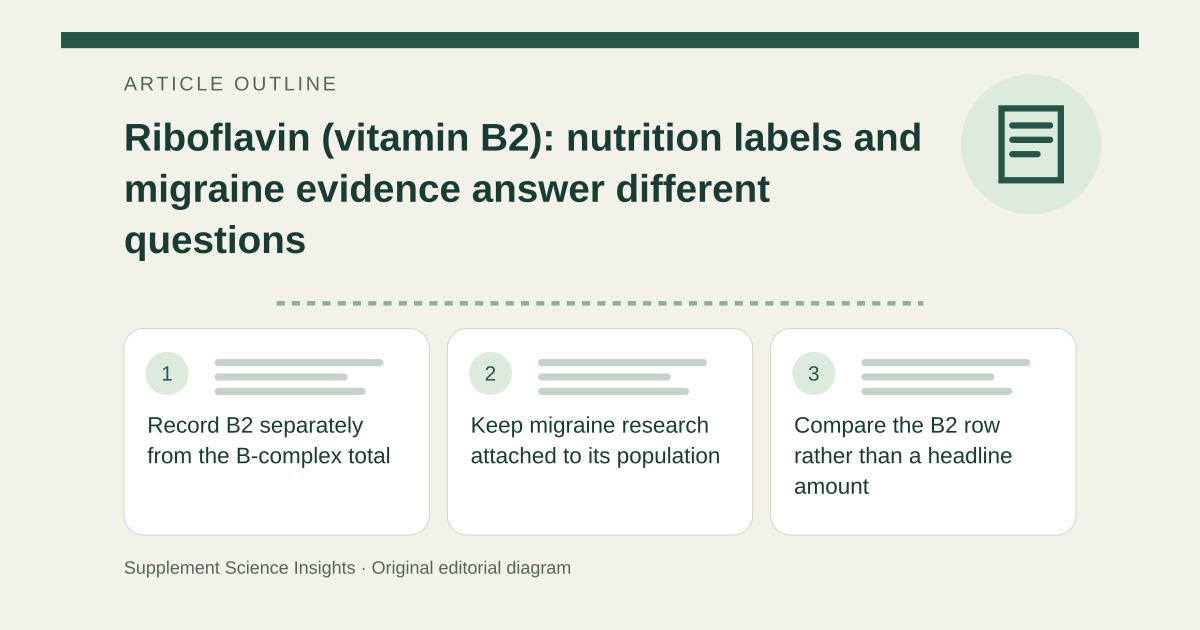
Record B2 separately from the B-complex total
Riboflavin is vitamin B2. Supplements may contain free riboflavin or riboflavin 5′-phosphate. A B-complex label contains multiple nutrients, so its total blend weight does not identify the amount of riboflavin. [1]
Copy the B2 row, unit, serving size and form exactly. If the product front says only “B complex,” that wording is not enough to complete a riboflavin comparison. Use the detailed nutrient panel or leave the quantity unresolved. [1]
Keep migraine research attached to its population
NIH describes a small and mixed body of migraine research, including differences between adult and pediatric findings. Evidence about prevention is also different from evidence about stopping an attack that has already begun. [1]
Before treating a study as relevant, identify who took part, what they received, the comparator, duration and measured outcome. A result in adults does not automatically answer a question about children, and a study amount is not a personal dosing instruction. This page does not independently update migraine guidelines. [1]
Compare the B2 row rather than a headline amount
Consider two invented labels. A lists a 50 mg B-complex blend but gives no individual riboflavin amount. B separately declares 1.5 mg riboflavin per serving. Only B provides the information needed to enter a B2 amount in the comparison.
Do not enter 50 mg as A’s riboflavin quantity or divide the blend evenly among its listed vitamins. Neither assumption follows from the label. The fictional numbers teach disclosure reading and are not actual product observations or recommended intakes.
| Label | Declared information | B2 amount established? |
|---|---|---|
| A | 50 mg B-complex blend; individual B2 absent | No |
| B | 1.5 mg riboflavin per serving | Yes, as a label declaration |
An absent upper limit is an evidence limitation
The U.S. Food and Nutrition Board has not established a tolerable upper intake level for riboflavin. NIH cautions that limited reports of adverse effects do not establish that excessive intake is free of harm. [1]
A product used for a medical purpose should be discussed in that clinical context. Keep other ingredients and existing treatments visible; a B2-only study does not establish the suitability of a multi-ingredient headache formula. [1]
Use a question that the evidence can actually answer
For nutrition, ask what amount is declared and how it fits the dietary assessment. For a migraine claim, ask whether the relevant formulation and outcome were studied in a comparable population. These are separate entries, even if the same bottle appears in both discussions.
The cited NIH summary supplies background and cautions, not an endorsement of a brand. Individual trial appraisal, guideline reconciliation, correction-history review and independent scientific acceptance remain pending. No comparison on this page ranks migraine treatments.
Sources for this article
- NIH Office of Dietary Supplements — Riboflavin: Health Professional Fact Sheet
Source consulted: 2026-09-17. This is a reference resource, not a claim that we conducted the studies or tested a product.