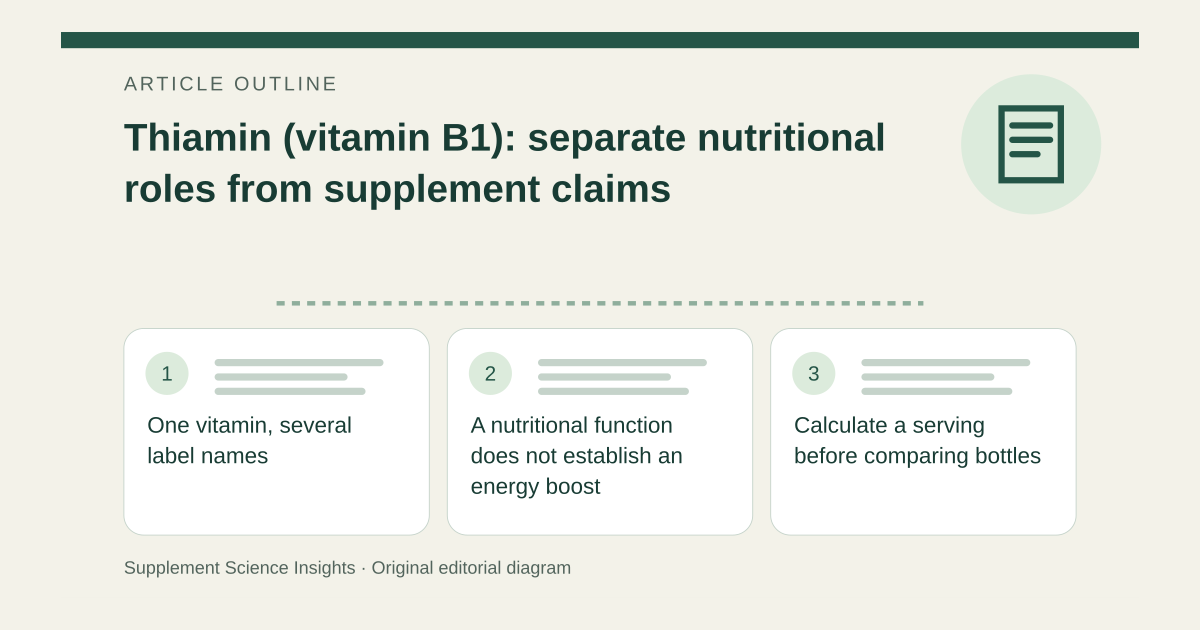
One vitamin, several label names
Thiamin, also spelled thiamine, is vitamin B1. It participates in energy metabolism. Common supplemental forms include thiamin hydrochloride and thiamin mononitrate; benfotiamine is a synthetic derivative sold in some products. These names describe preparations, not a ranking of clinical benefit. [1]
Start a comparison with the declared thiamin amount and the full form name. Keep the source wording beside the amount instead of assuming that two similar-looking ingredient names or capsule sizes make two products interchangeable. [1]
A nutritional function does not establish an energy boost
The fact that thiamin helps normal metabolism does not show that an added supplement improves fatigue in someone whose intake is already adequate. That claim needs a relevant clinical outcome and an appropriate comparison group, rather than a diagram of a biochemical pathway. [1]
NIH describes small, mixed studies of thiamin-related preparations in diabetes and calls for better research. Do not turn a change in a laboratory marker or a selected neuropathy study into a general promise for every B1 product. [1]
Calculate a serving before comparing bottles
Imagine Label A declares 2 mg thiamin per two-tablet serving, while Label B declares 2 mg per one-tablet serving. A tablet from A supplies 1 mg according to that fictional declaration; a tablet from B supplies 2 mg. The equal serving amounts conceal different amounts per tablet.
Write both columns in the worksheet. The arithmetic compares labels only: it does not say that either serving is needed, that either form is superior or that the reader should change how a prescribed preparation is taken.
| Label | Declared serving | Thiamin per tablet |
|---|---|---|
| A | 2 mg / 2 tablets | 1 mg |
| B | 2 mg / 1 tablet | 2 mg |
Medical context matters more than a familiar vitamin name
NIH identifies alcohol dependence and bariatric surgery among settings associated with thiamin inadequacy. Severe deficiency requires medical assessment; a shopping comparison is not a treatment protocol. Some medicines, including furosemide and fluorouracil, can affect thiamin status. [1]
No tolerable upper intake level has been established for thiamin because the available adverse-effect evidence is insufficient. This is not proof that every amount or preparation is harmless. Discuss suspected deficiency and the complete medicine list with the treating clinician. [1]
What this page can help you decide
You can use the worksheet to identify the form, declared amount, serving definition and information missing from a label. You cannot infer a diagnosis, symptom benefit or absorption conversion from those entries alone.
This article uses a government evidence summary for background. It is not a systematic review of benfotiamine, a current diabetes guideline or an independently reviewed recommendation. No retail product is selected; the question here is how to read a B1 claim accurately.
Sources for this article
- NIH Office of Dietary Supplements — Thiamin: Health Professional Fact Sheet
Source consulted: 2026-09-17. This is a reference resource, not a claim that we conducted the studies or tested a product.