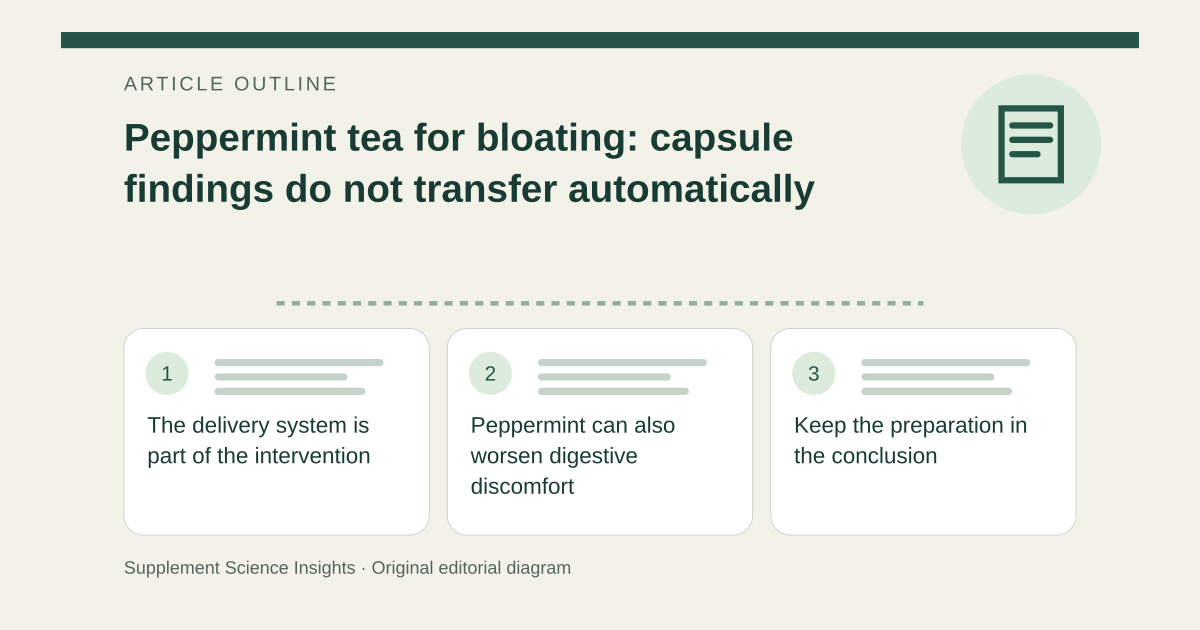
The delivery system is part of the intervention
NCCIH describes evidence that enteric-coated peppermint oil may improve overall IBS symptoms and abdominal pain in adults. The coating affects delivery and may reduce some upper-digestive side effects. Tea made from leaves does not reproduce that preparation by definition. [1]
Consequently, the capsule evidence does not establish an equivalent number of cups of tea or a universal best tea for bloating. The source does not provide a conversion that would make those interventions interchangeable. [1]
Peppermint can also worsen digestive discomfort
Oral peppermint oil can cause heartburn, nausea and abdominal pain. NCCIH distinguishes certain peppermint-plus-caraway products studied for indigestion from peppermint oil alone, which may worsen indigestion in some people. [1]
A response to a beverage also does not diagnose the cause of bloating. Persistent or troublesome symptoms deserve assessment, particularly before repeatedly adding different herbal combinations. Tea safety information does not establish safety of swallowing a concentrated essential oil. [1]
Keep the preparation in the conclusion
Imagine a trial finds improved IBS symptoms with a specific coated capsule. Rewriting the finding as peppermint tea cures bloating changes the preparation, condition and strength of the claim. Preserve all three when using the evidence.
| Observation | What it establishes |
|---|---|
| Coated oil capsule | Studied delivery system |
| Leaf tea | Different exposure |
| Bloating | Not itself an IBS diagnosis |
Sources for this article
- NCCIH: Peppermint Oil
Source consulted: 2026-09-17. This is a reference resource, not a claim that we conducted the studies or tested a product.