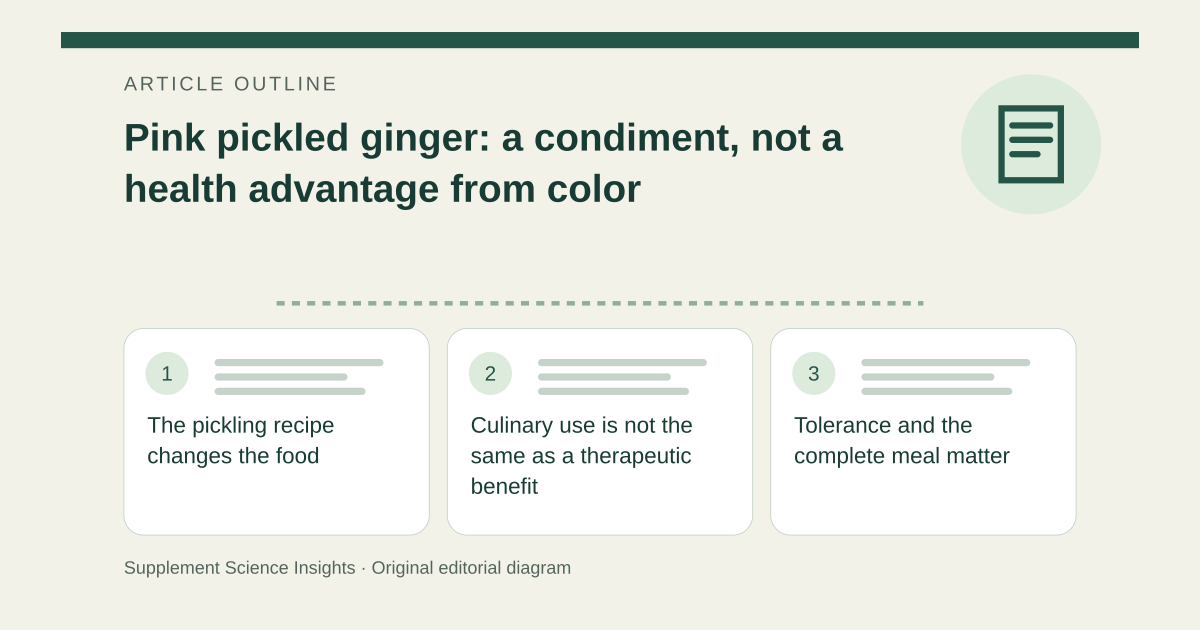
The pickling recipe changes the food
Gari commonly combines young ginger with vinegar, sugar and salt. The finished condiment therefore differs from plain ginger, and its sugar or sodium content depends on the recipe and serving. Compare the actual label rather than assuming every pink jar has the same composition. [1][2]
Culinary use is not the same as a therapeutic benefit
A small portion can add flavor to a meal. NCCIH’s findings about ginger in specific nausea settings do not establish equivalent effects from an unspecified amount of pickled ginger. Pink color does not supply the missing dose or evidence. [3]
Tolerance and the complete meal matter
Ginger can cause heartburn, abdominal discomfort, diarrhea or mouth/throat irritation. If the condiment aggravates symptoms, reduce or avoid it rather than interpreting discomfort as a desirable effect. People managing sodium or sugar intake should include the pickling ingredients in the meal assessment. [3][2]
Compare jars on useful information
Imagine two jars differ in shade but have different sodium and sugar values. The shade does not settle which suits the meal or dietary needs. Ingredients, serving and appropriate storage provide more useful information. [2][1]
| Question | Relevant information |
|---|---|
| Does it fit the meal? | Actual portion and flavor |
| Dietary restrictions? | Sugar, sodium and ingredients |
| Health benefit claim? | Evidence for that preparation |
Sources for this article
- Quick Tsukemono | Kikkoman Corporation
Source consulted: 2026-09-21. This is a reference resource, not a claim that we conducted the studies or tested a product. - How to Understand and Use the Nutrition Facts Label | FDA
Source consulted: 2026-09-21. This is a reference resource, not a claim that we conducted the studies or tested a product. - Ginger: Usefulness and Safety | NCCIH
Source consulted: 2026-09-21. This is a reference resource, not a claim that we conducted the studies or tested a product.