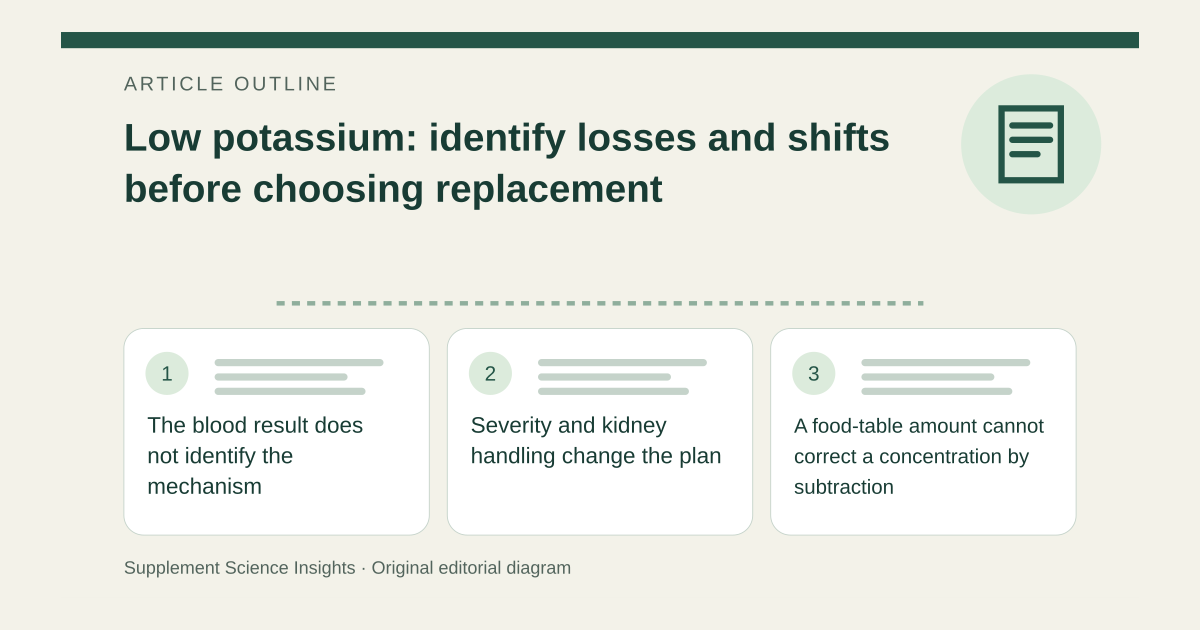
The blood result does not identify the mechanism
ODS describes hypokalemia as uncommon from low dietary intake alone. Diarrhea, vomiting-related kidney losses, some diuretics, laxative misuse and shifts into cells are among possible contributors. [1]
A diet history can help, but it does not replace a review of medicines, recent illness, kidney function and the measured laboratory result. The same blood concentration can arise in different clinical situations. [1]
Severity and kidney handling change the plan
Potassium depletion can cause weakness and other symptoms, while severe abnormalities can impair muscle function and cause dangerous arrhythmias. Symptoms alone cannot determine the level or the appropriate replacement route. [1]
The clinical plan may involve addressing the cause as well as replacing potassium. Adding concentrated potassium without assessment can create excessive levels, particularly when excretion is impaired. This article gives no tablet, liquid or intravenous replacement protocol. [1]
A food-table amount cannot correct a concentration by subtraction
Imagine a blood result is expressed in mmol/L and a food entry in milligrams per serving. These describe different quantities. Subtracting the laboratory number from a reference range does not tell someone how many food servings or tablets will safely correct it.
| Detail | Interpretation |
|---|---|
| Blood mmol/L | A concentration |
| Food mg/serving | An intake amount |
| Replacement plan | Requires cause and clinical context |
Sources for this article
- NIH ODS: Potassium
Source consulted: 2026-09-17. This is a reference resource, not a claim that we conducted the studies or tested a product.