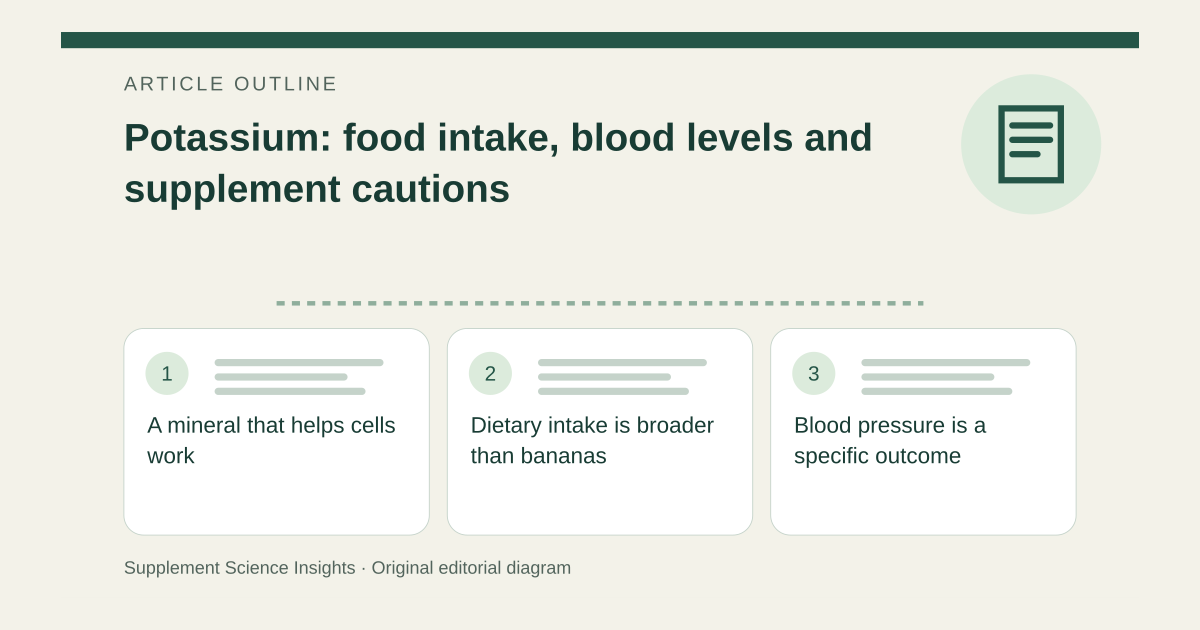
A mineral that helps cells work
Potassium helps maintain electrical and fluid balance across cell membranes. Nerve transmission and muscle contraction depend on that balance. Most potassium is inside cells, while the small amount circulating in blood is tightly regulated. A normal nutritional role should not be confused with evidence that an extra tablet improves muscle performance. [1]
Kidneys are central to potassium regulation. This explains an apparent contradiction: a higher-potassium eating pattern can be useful for some people, while deliberately increasing potassium can be dangerous for others. The difference is the person's kidney function, medicines and clinical setting. [1]
Dietary intake is broader than bananas
Beans, lentils, potatoes, vegetables, fruit, milk and yogurt contribute potassium. The U.S. adequate intake for adults is 3,400 mg daily for men and 2,600 mg for women, with separate pregnancy and lactation values. These are total-intake reference values for generally healthy people, not quantities to add as supplements. [2]
A useful food assessment looks at the whole pattern. Replacing several low-potassium foods may matter more than choosing one celebrated fruit. A food's potassium content also says nothing about whether that food fits an individual kidney-care plan. [2]
Blood pressure is a specific outcome
NIH summarizes evidence linking higher potassium intake with lower blood pressure, especially in people with hypertension and higher sodium intake. That does not establish that every potassium salt, dose or combination electrolyte product has the same effect. [1]
Low dietary intake and low blood potassium are also different findings. A blood result can be affected by illness, medicines, losses or shifts between cells and blood. Treating a laboratory abnormality requires an assessment of its cause rather than an automatic calculation from a food diary. [1]
Kidney disease and medicines change the decision
Kidney disease and medicines such as ACE inhibitors, angiotensin-receptor blockers and potassium-sparing diuretics can raise the risk of excessive blood potassium. Potassium-containing salt substitutes belong in the same conversation as tablets and powders. [2]
Some other medicines or substantial gastrointestinal losses can lower potassium. Do not try to infer the direction from a drug's general purpose. A clinician or pharmacist needs the actual names, recent blood results and all potassium sources before advising a change. [2]
Keep a supplemental subtotal separate
Imagine a powder declares 200 mg potassium per scoop and a tablet declares 99 mg. One fictional scoop plus one tablet totals 299 mg from those products. It does not total the day's dietary intake and cannot predict the person's blood potassium.
If the powder instead lists only a 1,000 mg electrolyte blend, its potassium amount is unresolved. Do not enter the full blend as potassium or divide it equally among minerals. The table records declarations, not a recommended combination or verified laboratory content.
| Entry | Declared potassium |
|---|---|
| Powder, one scoop | 200 mg |
| Tablet, one | 99 mg |
| Supplement subtotal | 299 mg |
Bring the right information to the question
For a general nutrition question, begin with foods and the overall dietary pattern. For a low or high laboratory value, begin with the treating team's explanation and plan. For an electrolyte product, record each declared mineral and the serving actually used.
These routes should not be collapsed into “more potassium is better.” This reference explains the distinctions and links to NIH summaries; it does not select a replacement dose or recommend a retail product.
Sources for this article
- NIH ODS — Potassium, professional fact sheet
Source consulted: 2026-09-17. This is a reference resource, not a claim that we conducted the studies or tested a product. - NIH ODS — Potassium, consumer fact sheet
Source consulted: 2026-09-17. This is a reference resource, not a claim that we conducted the studies or tested a product.