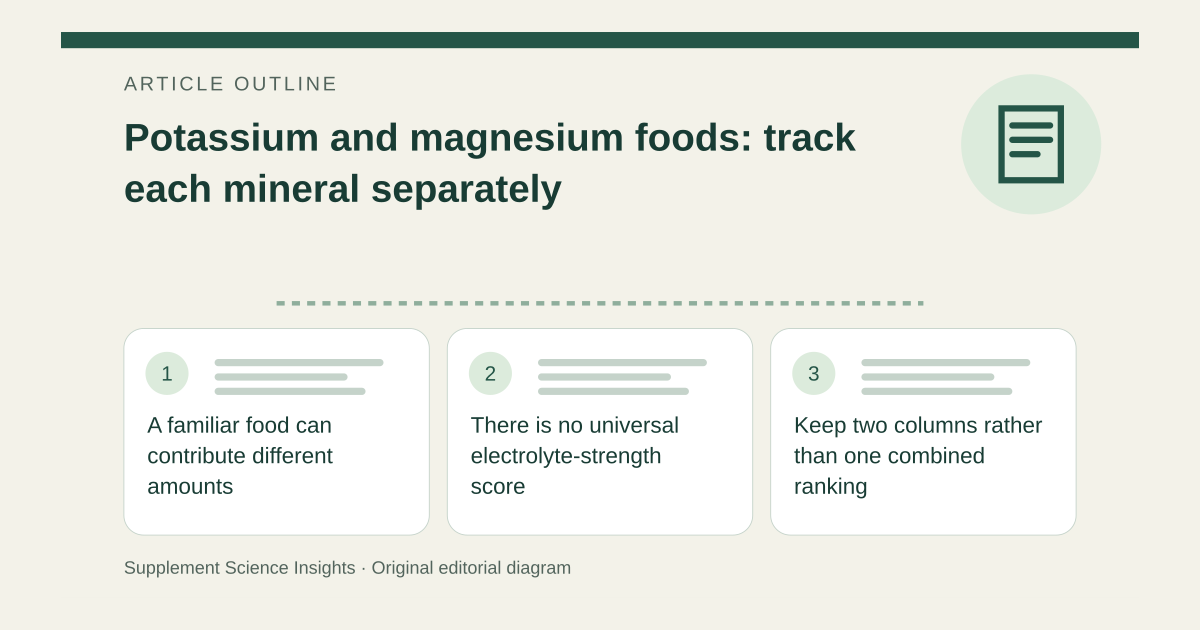
A familiar food can contribute different amounts
The ODS tables list about 422 mg potassium and 32 mg magnesium in a medium banana. An ounce of dry-roasted cashews supplies about 187 mg potassium and 74 mg magnesium. These examples show why one mineral cannot be estimated from the other. [1][2]
Legumes and vegetables also contribute, but preparation and portion must match the selected entry. A raw-spinach potassium value and a cooked-spinach magnesium value should not be presented as though they describe one identical serving. [1][2]
There is no universal electrolyte-strength score
Potassium and magnesium have separate intake references and functions. Adding their milligram amounts does not create a meaningful measure of muscle recovery, cramp prevention or electrolyte balance. [1][2]
Food-based guidance also needs health context. People at risk of high potassium because of kidney disease or medicines may require individualized advice even for ordinary foods. This comparison does not override such a diet or recommend concentrated mineral products. [1][2]
Keep two columns rather than one combined ranking
Imagine a food has more potassium per serving while another has more magnesium. Calling either the stronger electrolyte food hides which nutrient is being considered. Record both amounts and the portion, then relate each to the actual dietary question.
| Entry | Meaning |
|---|---|
| Potassium per portion | One column |
| Magnesium per portion | Another column |
| Combined milligrams | Not a clinical benefit score |
Sources for this article
- NIH ODS: Potassium
Source consulted: 2026-09-17. This is a reference resource, not a claim that we conducted the studies or tested a product. - NIH ODS: Magnesium
Source consulted: 2026-09-17. This is a reference resource, not a claim that we conducted the studies or tested a product.