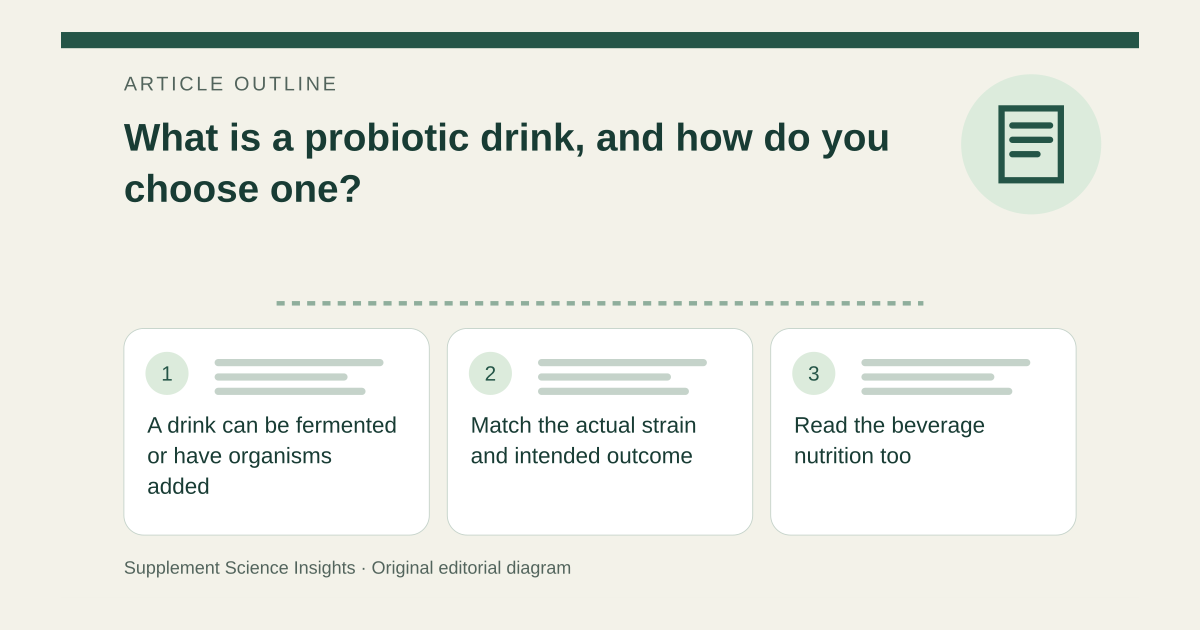
A drink can be fermented or have organisms added
ODS describes potential probiotic sources among fermented foods and notes that unfermented foods such as juices or milks can have probiotics added. Fermentation alone does not establish a proven probiotic effect, and processing can remove viable cultures from some foods. [1]
Match the actual strain and intended outcome
A product tested for one outcome cannot automatically claim another. Identify the genus, species and strain or defined combination, the viable amount, and whether the finished formulation matches relevant research. There is no single drink established here as best for every person. [1]
Read the beverage nutrition too
Serving size affects both the organism amount and nutrients consumed. Compare added sugars, other ingredients and allergens, and count what you actually drink. Doubling bottles to chase an unspecified benefit also doubles their other contents. [2][1]
Storage and medical context remain important
Follow storage directions and check what the viable-count guarantee means. People who are severely ill or immunocompromised need medical review because live-organism products can carry greater risks. New digestive discomfort is not proof that a cleansing process is working. [1]
An everyday food choice need not become a treatment claim
Imagine choosing a cultured drink for taste and dietary variety. That is different from buying it to treat persistent abdominal pain. For the latter, identify the cause and relevant evidence instead of relying on popularity or a generic gut-health promise. [1]
| Check | Reason |
|---|---|
| Strain and viable amount | Match relevant benefit evidence |
| Serving nutrition | Count the whole beverage |
| Storage and personal context | Delivered organisms and suitability |
Sources for this article
- Probiotics - Health Professional Fact Sheet
Source consulted: 2026-09-21. This is a reference resource, not a claim that we conducted the studies or tested a product. - How to Understand and Use the Nutrition Facts Label | FDA
Source consulted: 2026-09-21. This is a reference resource, not a claim that we conducted the studies or tested a product.