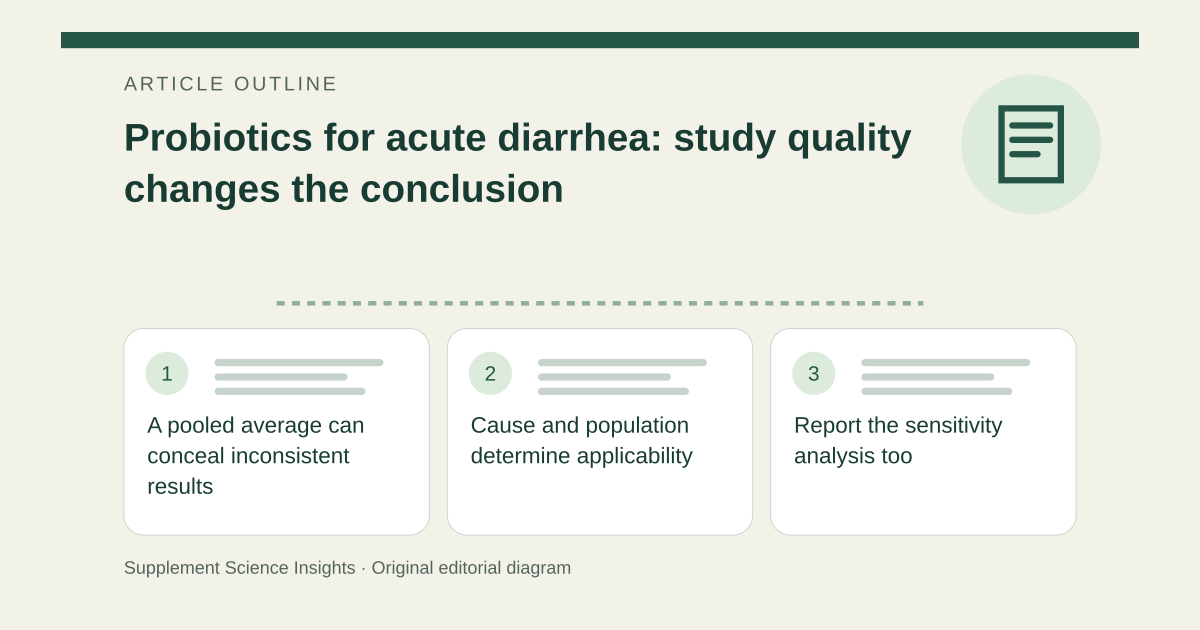
A pooled average can conceal inconsistent results
ODS describes a review of acute infectious diarrhea studies that suggested a shorter average illness with probiotics. However, when the analysis was limited to trials at low risk of bias, the apparent difference in duration or persistent diarrhea was not found. [1]
The source also describes large pediatric emergency-department trials with no benefit from the tested preparations. These findings make a promise that any probiotic will shorten gastroenteritis by a fixed number of hours unreliable. [1]
Cause and population determine applicability
Acute infectious diarrhea, antibiotic-associated diarrhea and chronic bowel symptoms are different conditions. Evidence for one should not be borrowed to recommend a product for the others, particularly when strains and study settings differ. [1]
ODS discusses rehydration as the central management issue in many episodes. A probiotic does not supply the fluids lost through diarrhea, and persistent or severe illness needs assessment. The source does not justify a universal CFU target or a guaranteed response time. [1]
Report the sensitivity analysis too
Imagine a review finds a benefit across all included trials, but the difference disappears when only more reliable trials remain. Reporting just the favorable overall estimate hides a material limitation. Both analyses belong in the explanation of how confident to be.
| Detail | Interpretation |
|---|---|
| All trials combined | One estimate |
| Low-bias trials only | A reliability check |
| Different conclusions | Uncertainty matters |
Sources for this article
- NIH ODS: Probiotics
Source consulted: 2026-09-17. This is a reference resource, not a claim that we conducted the studies or tested a product.