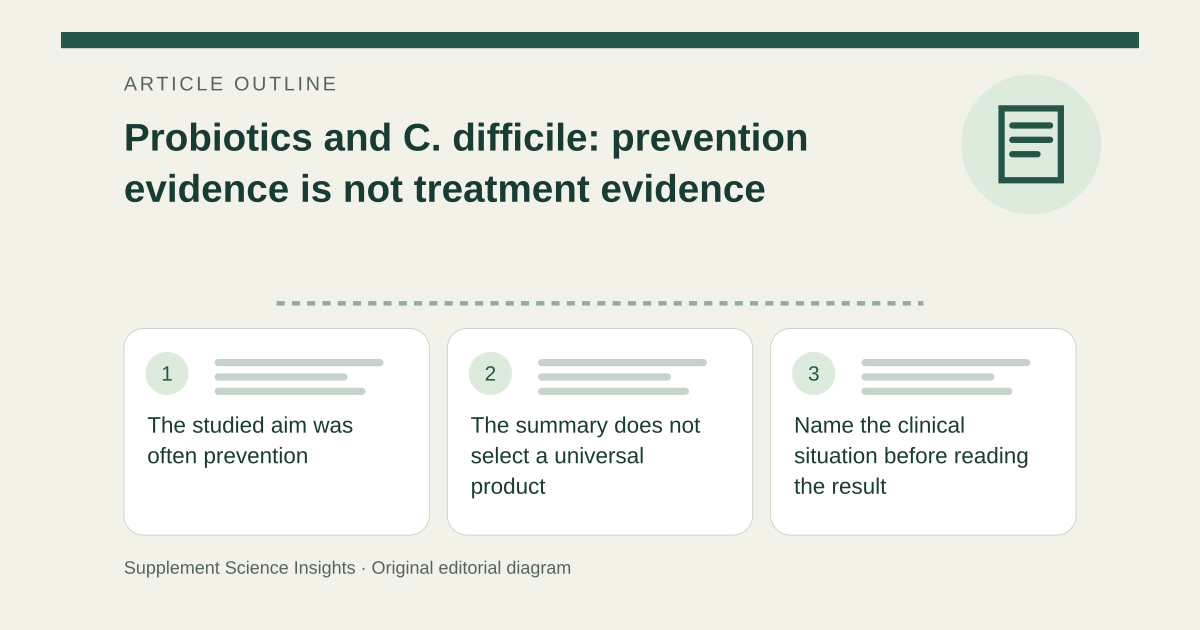
The studied aim was often prevention
NCCIH describes a 2017 analysis of studies, mostly involving hospital patients, that found moderate-certainty evidence of reduced C. difficile-associated diarrhea with probiotics during antibiotic exposure. This is a dated synthesis, not a newly completed review of current treatment guidance. [1]
Preventing diarrhea in people receiving antibiotics is different from treating an established infection or preventing repeated recurrences after treatment. A prevention result cannot simply be moved to those other questions. [1]
The summary does not select a universal product
NCCIH notes uncertainty about the most useful probiotic types, duration and amounts. It also distinguishes frail or immunocompromised patients when discussing safety. A general label such as probiotic supplies too little information for the decision. [1]
Suspected or diagnosed C. difficile infection needs clinical assessment and an appropriate treatment plan. This article does not recommend replacing treatment, choosing a brand or starting a probiotic solely because an antibiotic was prescribed. [1]
Name the clinical situation before reading the result
Imagine a study enrolls antibiotic users without active C. difficile diarrhea, while a person already has confirmed infection. Their treatment question differs from the study’s prevention question. The mismatch should be stated rather than hidden behind the shared organism name.
| Detail | Interpretation |
|---|---|
| No current infection | Prevention question |
| Confirmed active infection | Treatment question |
| Recurrent infection | Another distinct question |
Sources for this article
- NCCIH: Probiotics—Usefulness and Safety
Source consulted: 2026-09-17. This is a reference resource, not a claim that we conducted the studies or tested a product.