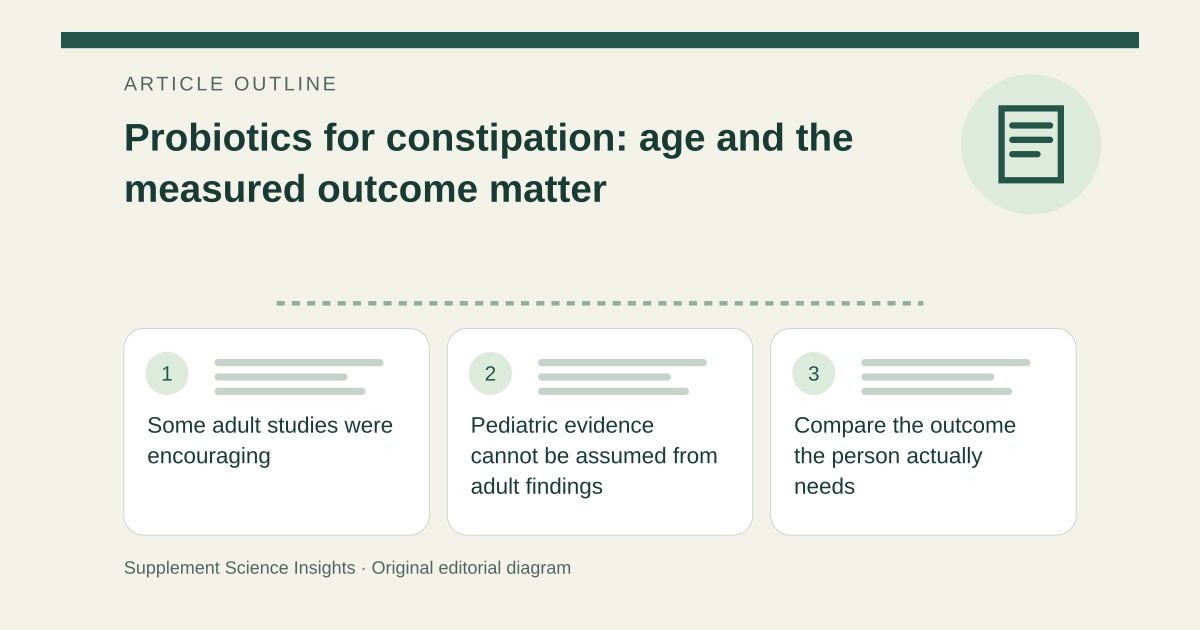
Some adult studies were encouraging
NCCIH summarizes a 2014 review of fourteen adult constipation studies that found some evidence of benefit, particularly for preparations described as Bifidobacterium lactis. It also describes a 2017 older-adult review with a small benefit. [1]
These are dated research summaries, not a newly established product ranking. The organism description alone cannot identify an equivalent retail strain, amount or treatment course. [1]
Pediatric evidence cannot be assumed from adult findings
The same NCCIH resource describes two 2017 pediatric reviews with differing conclusions. Differences in participants, probiotic preparations and study methods made comparisons difficult. [1]
This illustrates why age and the exact endpoint matter. More frequent stools do not necessarily establish improvement in discomfort, stool consistency or the underlying cause of constipation. [1]
Compare the outcome the person actually needs
Imagine a trial reports one additional bowel movement over a specified period, but a reader’s main problem is painful passage. The frequency result does not by itself establish relief from that separate symptom.
A useful evidence note records the actual endpoint and follow-up rather than converting any favorable result into complete constipation relief.
| Question | Interpretation |
|---|---|
| Adult or child participants | Population matters |
| Stool frequency or discomfort | Endpoints differ |
| Study preparation | Not any product in the category |
Keep ordinary care and evidence dates in view
NCCIH advises against using probiotics to postpone evaluation of a health problem. Persistent symptoms or a child’s constipation need an appropriate assessment, not automatic transfer of an adult study. [1]
This page explains the older agency summary and its uncertainty. It does not claim an exhaustive review of newer trials or provide a universal probiotic regimen. [1]
Sources for this article
- NCCIH: Probiotics—Usefulness and Safety
Source consulted: 2026-09-17. This is a reference resource, not a claim that we conducted the studies or tested a product.