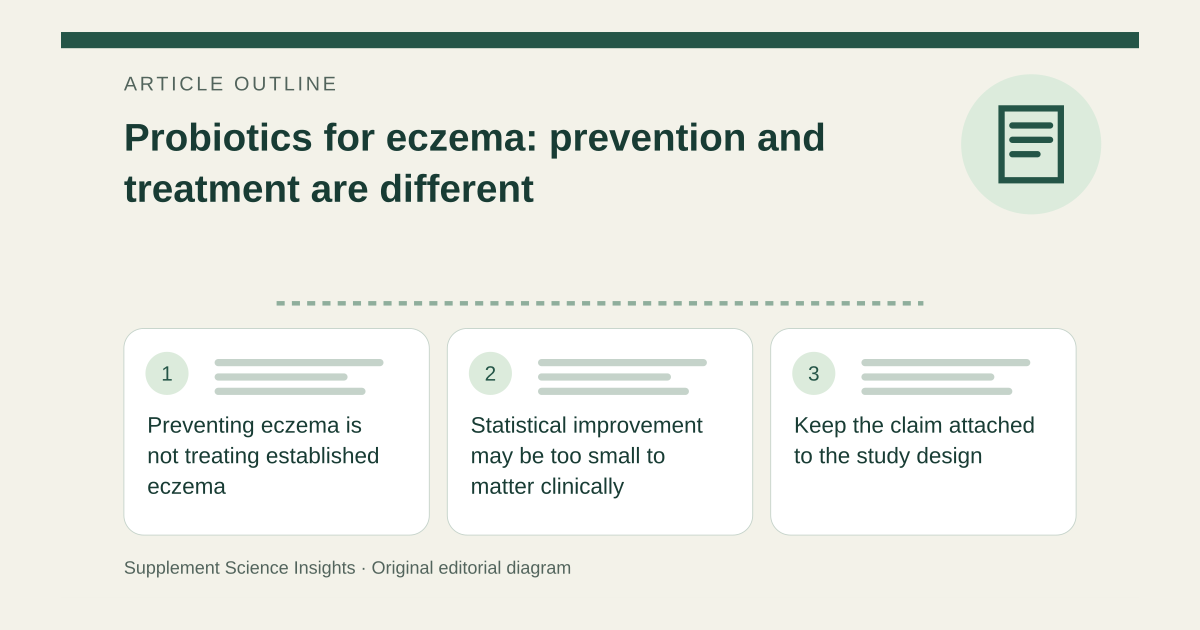
Preventing eczema is not treating established eczema
ODS distinguishes studies intended to reduce the chance of developing atopic dermatitis from studies treating existing symptoms. Some prevention studies involve exposure during pregnancy or early infancy. [1]
Those findings cannot be transferred directly to an adult seeking relief from current eczema. The participants, timing and outcome are different, even when both studies use the word probiotic. [1]
Statistical improvement may be too small to matter clinically
ODS describes mixed treatment results and a Cochrane review in which changes in a dermatitis severity score were small and not considered clinically significant. Other summaries found benefits for some strains or age groups. [1]
The practical question is therefore how much symptoms improved and for whom, not merely whether one statistical comparison was positive. A single organism name does not resolve the variation. [1]
Keep the claim attached to the study design
Imagine a prevention study finds fewer children develop eczema after a defined early-life intervention. That does not show the same preparation clears a current adult flare.
A treatment comparison would need participants who already have the condition and outcomes that reflect their symptoms or clinical severity.
| Question | Interpretation |
|---|---|
| Lower chance of developing eczema | Prevention |
| Less severe existing eczema | Treatment |
| Tiny score change | May not mean noticeable relief |
Do not replace established skin care with a category claim
The ODS synthesis says effects depend on strain, timing and age, making broad recommendations difficult. It does not establish probiotics as a universal replacement for eczema treatment. [1]
This article summarizes that evidence without independently reappraising the trials or choosing a product. Severe illness or immune compromise also changes probiotic safety considerations. [1]
Sources for this article
- NIH ODS: Probiotics
Source consulted: 2026-09-17. This is a reference resource, not a claim that we conducted the studies or tested a product.