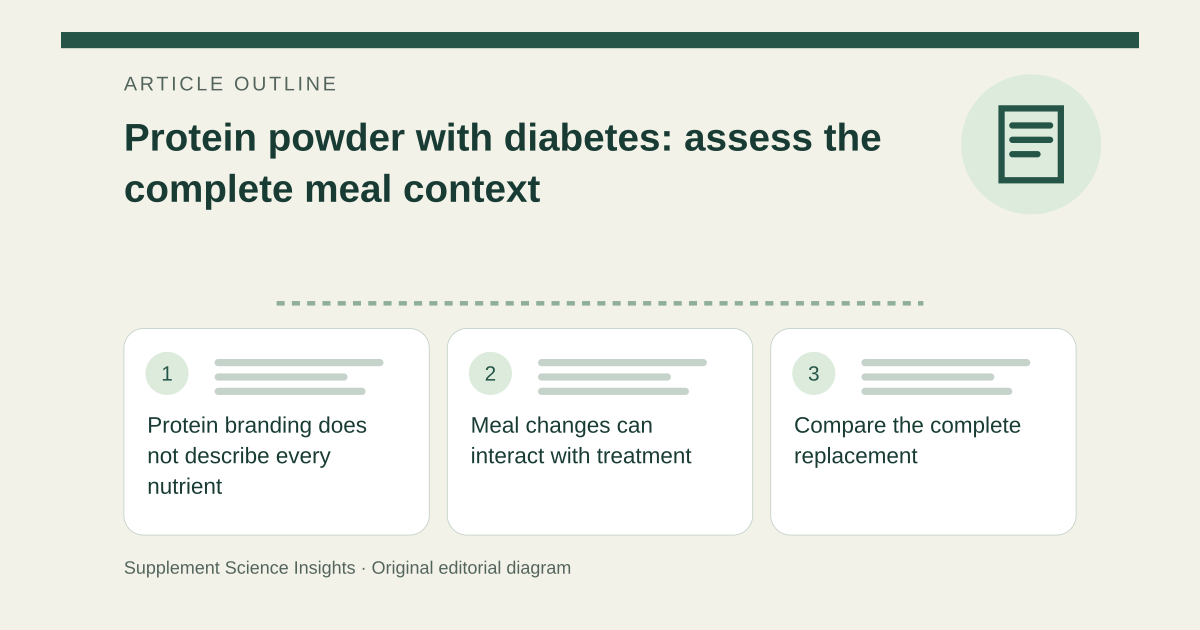
Protein branding does not describe every nutrient
NIDDK explains that dietary carbohydrates can raise blood glucose. Check total carbohydrate and the actual serving of the powder and mixer, rather than assuming a protein-focused name means no carbohydrate. [1][2]
Added sugars provide one useful detail, but total carbohydrate is a different label entry. The planned drink should be assessed as the complete preparation. [1][2]
Meal changes can interact with treatment
NIDDK advises coordinating meal timing with the care team, particularly when medicines can cause low glucose if meals are skipped or delayed. Replacing a usual meal with a shake can change more than protein intake. [1][2]
Kidney disease or other conditions may also change the nutrition plan. This is a framework for discussing a product, not evidence that a particular powder treats diabetes. [1][2]
Compare the complete replacement
Imagine a shake replaces a carbohydrate-containing breakfast while the medication schedule stays unchanged. The change deserves review as a meal-and-treatment decision, not just a protein choice.
| Detail | Interpretation |
|---|---|
| Carbohydrate | Count powder and mixer |
| Meal replacement | Changes the eating pattern |
| Medication plan | May affect suitability |
Sources for this article
- Healthy Living with Diabetes - NIDDK
Source consulted: 2026-09-18. This is a reference resource, not a claim that we conducted the studies or tested a product. - How to Understand and Use the Nutrition Facts Label | FDA
Source consulted: 2026-09-18. This is a reference resource, not a claim that we conducted the studies or tested a product.