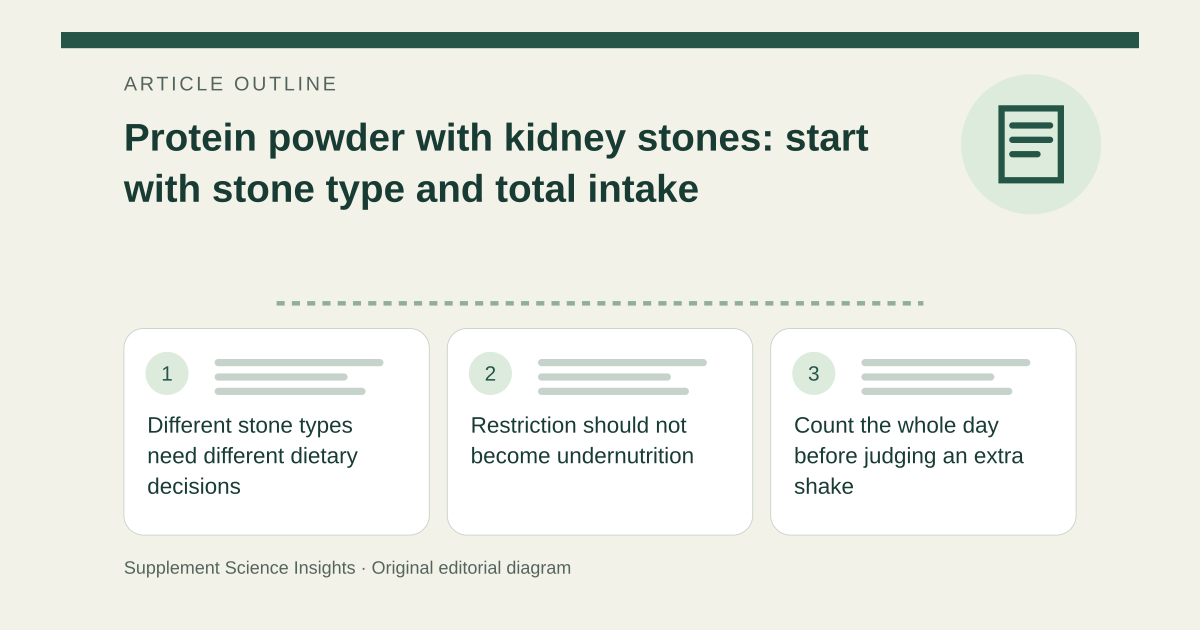
Different stone types need different dietary decisions
NIDDK explains that prevention may involve changes in sodium, animal protein, calcium or oxalate depending on the type of stone. It advises discussing total protein and the animal-versus-plant balance with a healthcare professional. [1]
A shake adds to daily intake. Review its protein source and sodium alongside meals instead of evaluating the scoop in isolation. [1]
Restriction should not become undernutrition
Even when animal protein is limited, adequate protein remains necessary. For calcium oxalate stones, NIDDK also explains that appropriate calcium from food can help block absorption of stone-forming substances. [1]
Do not remove all protein or calcium based on the name of a stone. The cited guidance supports a tailored plan, not a universal safe powder, scoop count or guarantee against recurrence. [1]
Count the whole day before judging an extra shake
Imagine a person already meets the protein amount agreed with a dietitian. Adding a shake changes that total, even if the package otherwise appears suitable.
| Detail | Interpretation |
|---|---|
| Stone type | Shapes prevention advice |
| Total diet | Includes the added shake |
| Adequate nutrition | Still required |
Sources for this article
- Eating, Diet, & Nutrition for Kidney Stones - NIDDK
Source consulted: 2026-09-18. This is a reference resource, not a claim that we conducted the studies or tested a product.