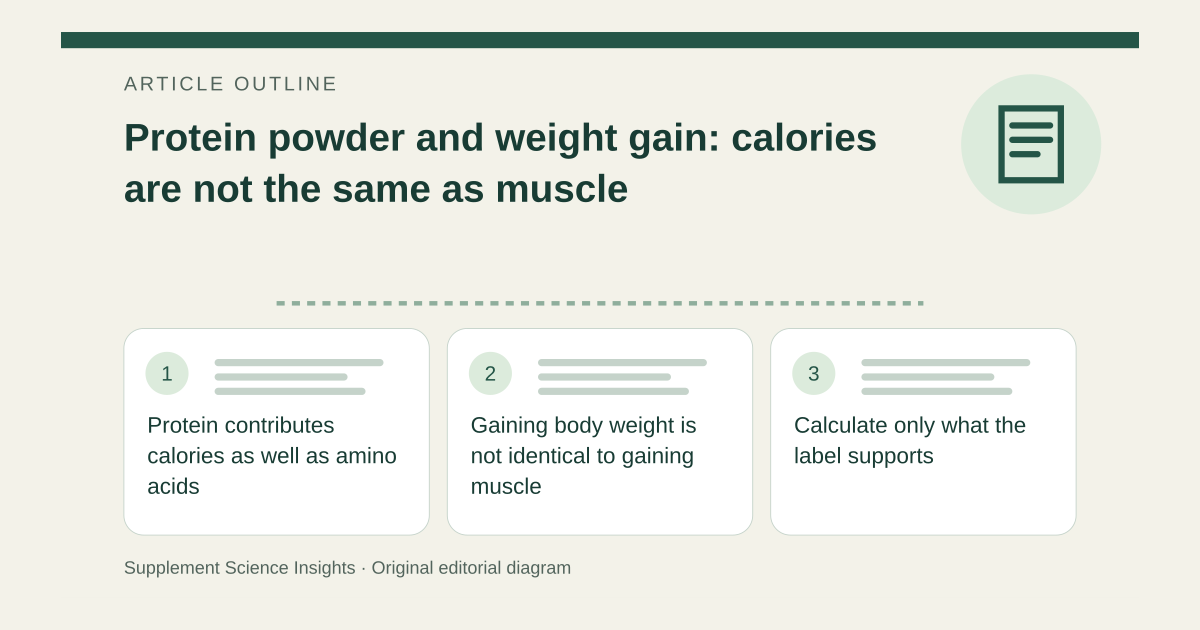
Protein contributes calories as well as amino acids
MedlinePlus states that one gram of protein supplies four calories. A supplement can therefore increase energy intake, particularly when it is added to meals rather than replacing another food. [1]
The finished shake may also contain carbohydrate or fat and may be mixed with calorie-containing ingredients. Its total calories cannot always be calculated from protein alone. [1]
Gaining body weight is not identical to gaining muscle
Sustained energy intake above needs can promote weight gain. Whether a particular shake creates that situation depends on the rest of the diet and energy expenditure, not simply on the product’s name. [1][2]
Resistance training and adequate protein contribute to muscle adaptation. A product marketed for weight gain does not establish that all weight gained will be lean tissue or that a larger serving gives a better training result. [1][2]
Calculate only what the label supports
Imagine a serving contains 25 grams of protein. That protein accounts for about 100 calories, before any calories from other ingredients or the liquid used to prepare it.
Adding those calories to unchanged meals differs from replacing a 100-calorie food. This arithmetic describes intake, not a prediction of kilograms gained over a fixed time.
| Detail | Meaning |
|---|---|
| 25 g protein × 4 calories/g | 100 calories from protein |
| Other ingredients | May add more calories |
| A scale increase | Does not identify the tissue gained |
The practical goal should stay explicit
Someone trying to increase intake has a different goal from someone whose current intake already meets needs. A food-based option and a powder can be compared on their actual serving, convenience and total nutritional contribution. [1][2]
Unexplained weight loss or difficulty eating warrants assessment of its cause. The energy calculation does not diagnose the problem or prescribe a treatment. [1][2]
Sources for this article
- MedlinePlus: Protein in diet
Source consulted: 2026-09-17. This is a reference resource, not a claim that we conducted the studies or tested a product. - NIH ODS: Dietary Supplements for Exercise and Athletic Performance
Source consulted: 2026-09-17. This is a reference resource, not a claim that we conducted the studies or tested a product.