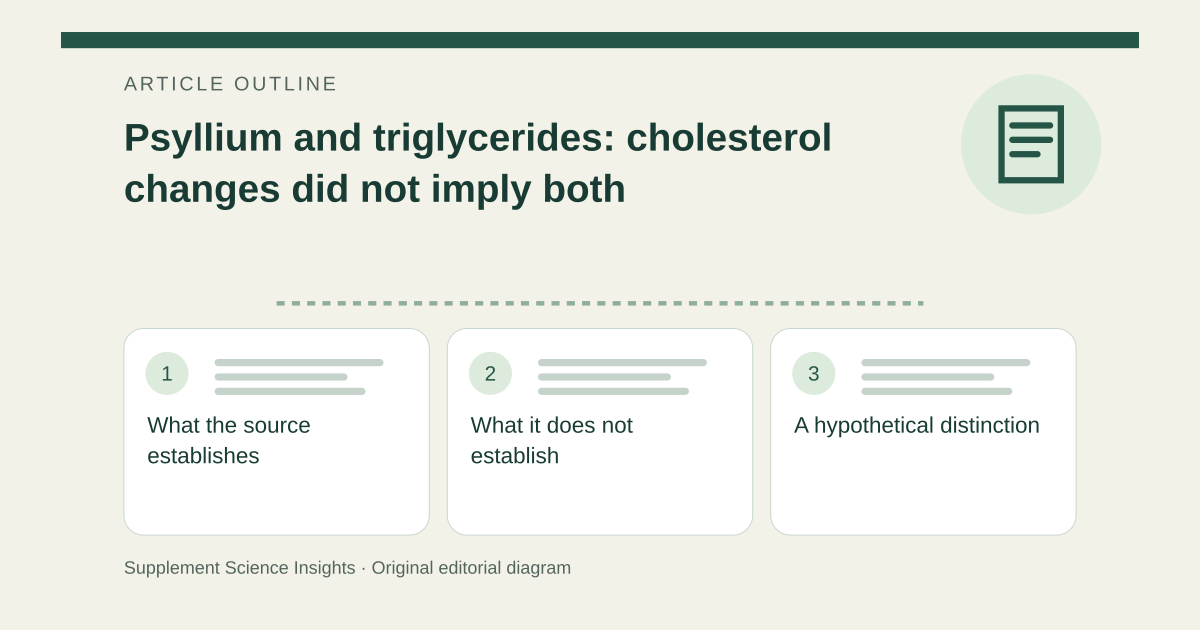
What the source establishes
Forty-two adults with high blood lipids followed a low-fat diet and completed randomized crossover cereal periods lasting two weeks each. Psyllium cereals supplied 6.7 grams of psyllium fiber daily; controls used wheat bran. [1]
Total and LDL cholesterol decreased with psyllium, as did HDL cholesterol. The LDL-to-HDL ratio improved, but triglycerides did not change. The investigators found no significant treatment-by-sex interaction. [1]
What it does not establish
Short treatment periods and a cereal-based intervention limit generalization to other products and populations. The study did not measure cardiovascular events. Funding and conflicts were not established from the abstract; it is one trial, not a complete evidence synthesis. [1]
A hypothetical distinction
Imagine a report says blood lipids improved. Checking each endpoint can reveal a null triglyceride result within that broad description.
| Detail | Interpretation |
|---|---|
| Cholesterol measure | Specify which one |
| Triglycerides | Separate endpoint |
| Clinical events | Not measured |
Sources for this article
- Psyllium reduces blood lipids in men and women with hyperlipidemia - PubMed
Source consulted: 2026-09-19. This is a reference resource, not a claim that we conducted the studies or tested a product.