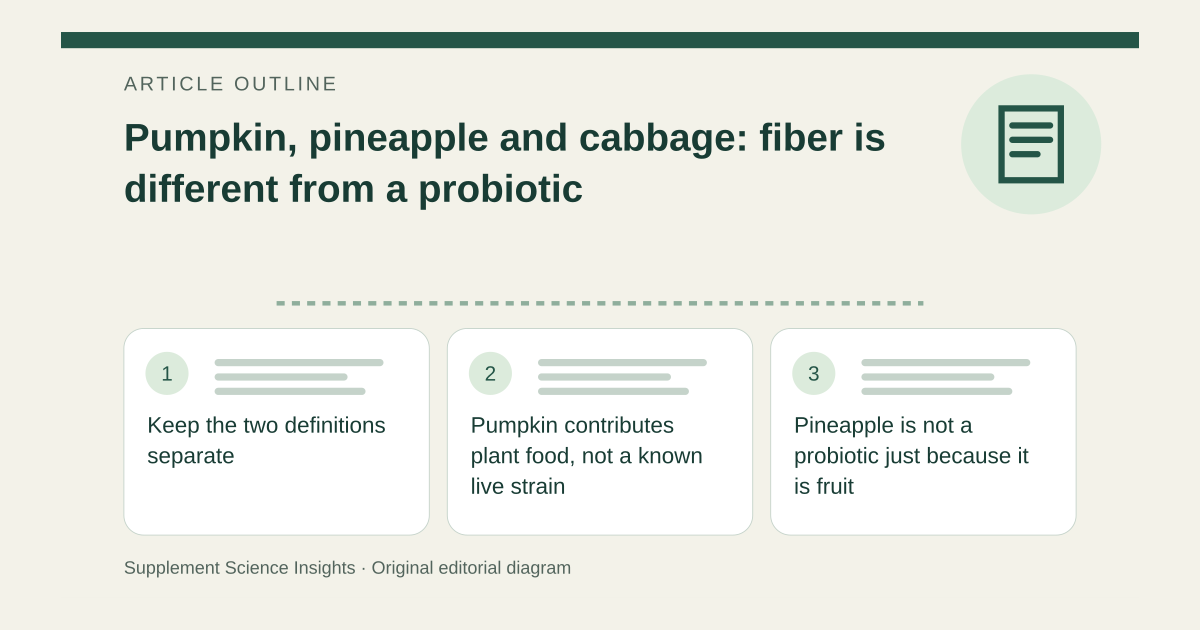
Keep the two definitions separate
NIH describes probiotics as live microorganisms with a demonstrated health benefit at an adequate amount. ISAPP defines a prebiotic by selective use of a substrate by host microbes with a health benefit. A vegetable can supply fiber without becoming a probiotic, and not every dietary fiber is a validated prebiotic. [1][2]
Pumpkin contributes plant food, not a known live strain
Illinois Extension identifies dietary fiber among pumpkin’s nutritional components. Cooked pumpkin or plain puree can contribute to food variety, but its fiber content does not establish a particular probiotic strain or a therapeutic prebiotic dose. Pumpkin pie filling also has a different full formula from plain pumpkin; check the actual ingredients. [3][4][2]
Pineapple is not a probiotic just because it is fruit
The FDA raw-fruit chart includes dietary fiber in pineapple. That nutritional fact is not a clinical study showing a particular prebiotic outcome or a live-microbe dose. Fresh fruit, juice and a drink with deliberately added cultures are different products; inspect any probiotic claim on the actual finished preparation. [5][1]
Raw and cooked cabbage differ from fermented cabbage
University of Minnesota Extension describes cabbage as usable raw, cooked or fermented into foods such as sauerkraut and kimchi. Cooking cabbage does not turn it into a probiotic, and rawness alone does not establish one either. Fermentation describes a process; later heating and the organisms actually present affect whether live cultures remain. Even live cultures require evidence before a specific probiotic benefit is claimed. [6][7][1]
Food value does not depend on earning a biotic label
These foods can be chosen for variety and preference without promising to treat a gut condition. For an explicit prebiotic claim, look for evidence about the substrate, amount and outcome. For a probiotic claim, identify the organisms and their supported use rather than inferring it from a fruit or vegetable name. [2][1]
Compare the actual preparations
Imagine a meal includes cooked pumpkin, fresh pineapple and canned sauerkraut. You cannot calculate a probiotic dose by adding their weights. The sauerkraut’s process and label need separate review, while the fruit and vegetables remain foods rather than measured microbial interventions. [1][7]
| Food or preparation | What the name does not prove |
|---|---|
| Pumpkin puree | A therapeutic prebiotic dose |
| Fresh pineapple | A probiotic strain count |
| Raw or cooked cabbage | A demonstrated probiotic effect |
| Fermented cabbage | Live cultures after every processing method |
Sources for this article
- Probiotics - Health Professional Fact Sheet
Source consulted: 2026-09-21. This is a reference resource, not a claim that we conducted the studies or tested a product. - ISAPP: Prebiotics
Source consulted: 2026-09-21. This is a reference resource, not a claim that we conducted the studies or tested a product. - Preparing Pumpkin | Illinois Extension
Source consulted: 2026-09-21. This is a reference resource, not a claim that we conducted the studies or tested a product. - How to Understand and Use the Nutrition Facts Label | FDA
Source consulted: 2026-09-21. This is a reference resource, not a claim that we conducted the studies or tested a product. - Raw Fruits Poster (Text Version / Accessible Version) | FDA
Source consulted: 2026-09-21. This is a reference resource, not a claim that we conducted the studies or tested a product. - Growing cabbage in home gardens | UMN Extension
Source consulted: 2026-09-21. This is a reference resource, not a claim that we conducted the studies or tested a product. - Creating a scientific definition of 'fermented foods' - International Scientific Association for Probiotics and Prebiotics (ISAPP)
Source consulted: 2026-09-21. This is a reference resource, not a claim that we conducted the studies or tested a product.