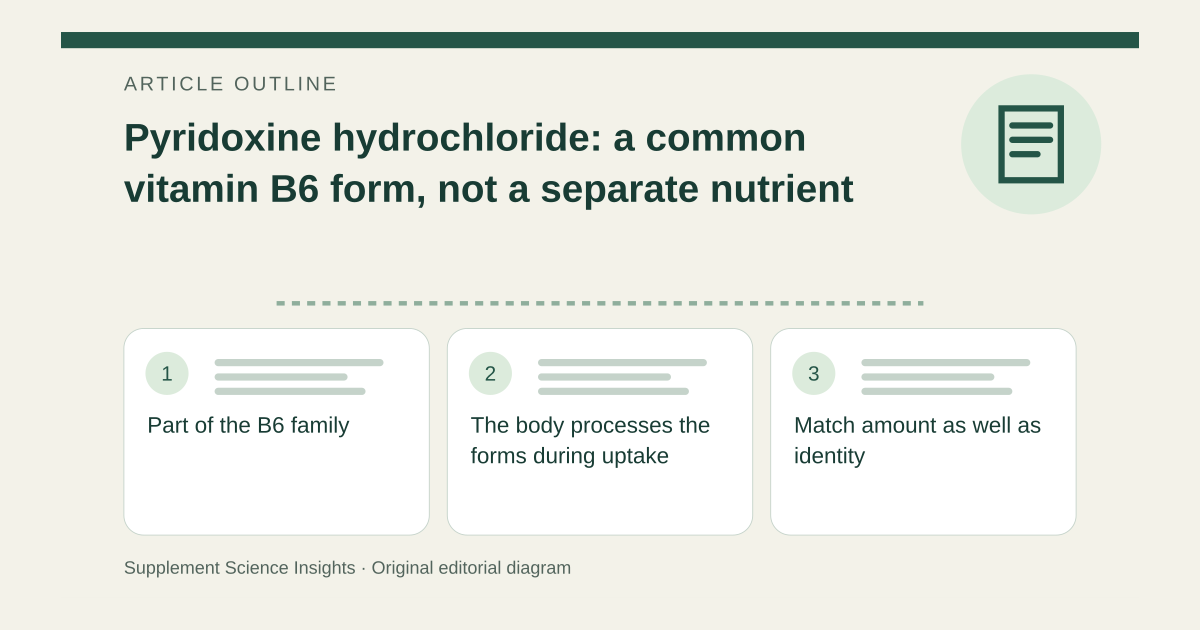
Part of the B6 family
Vitamin B6 refers to several related compounds, including pyridoxine, pyridoxal and pyridoxamine and their phosphate forms. Pyridoxine hydrochloride is a common supplemental source of pyridoxine. [1]
PLP and PMP are active coenzyme forms involved in metabolism. The distinction between an ingested form and a coenzyme role is useful, but it does not by itself rank retail products for treating symptoms. [1]
The body processes the forms during uptake
ODS describes B6 absorption in the jejunum and dephosphorylation of phosphorylated forms before uptake. Its supplement summary states that absorption does not differ substantially among the various supplement forms. [1]
Thus, a package emphasizing an active form should not automatically be interpreted as proof of better clinical outcomes. Absorption, metabolism, symptom improvement and safety are different questions. [1]
Match amount as well as identity
Imagine one product lists pyridoxine hydrochloride and another PLP, with different B6 amounts per serving. Comparing only the form names overlooks the difference in exposure.
Record the declared vitamin B6 amount, serving and actual use. Even a well-described composition does not determine the appropriate regimen for a particular medical problem.
| Observation | Interpretation |
|---|---|
| Named form | Describes the ingredient |
| B6 per actual serving | Describes exposure |
| Claimed symptom benefit | Needs evidence beyond the name |
The form claim does not remove excess-intake concerns
High supplemental B6 exposure can cause sensory nerve damage. Do not assume a formulation is free of this concern because its label uses biochemical terminology. [1]
Include all B6-containing products in the review, and discuss symptoms or proposed treatment with a clinician. This article identifies the form; it does not establish a superior brand or a therapeutic dose. [1]
Sources for this article
- NIH ODS — Vitamin B6: Health Professional Fact Sheet
Source consulted: 2026-09-17. This is a reference resource, not a claim that we conducted the studies or tested a product.