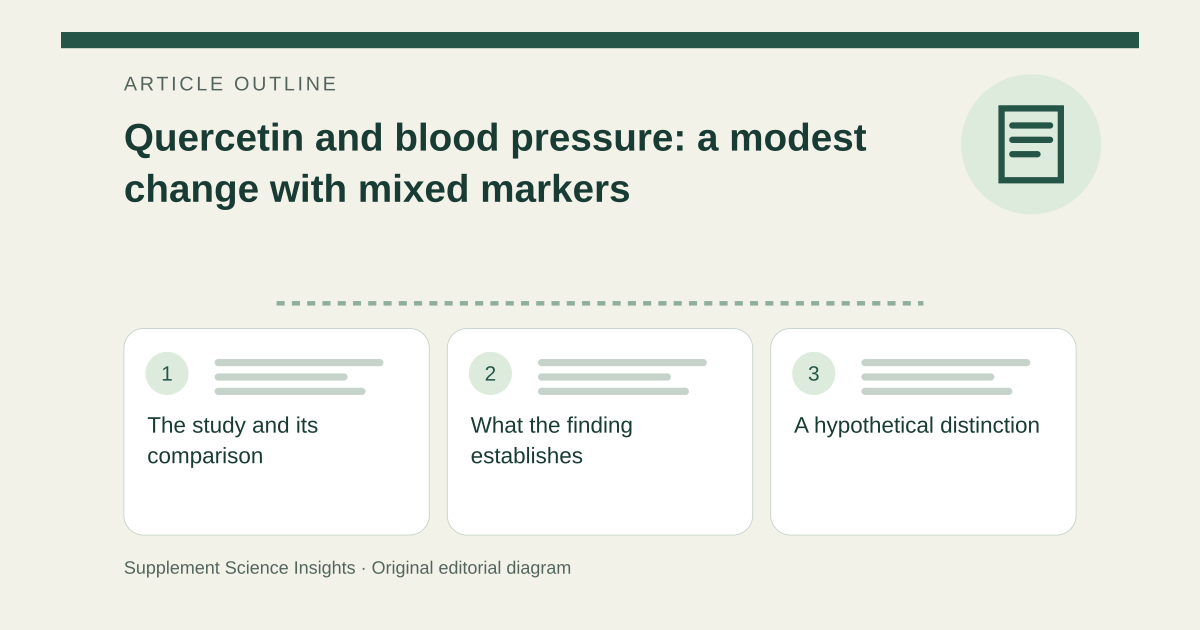
The study and its comparison
Ninety-three adults with overweight or obesity and metabolic-syndrome traits received 150 mg quercetin daily or placebo in six-week crossover periods separated by five weeks. [1]
Systolic pressure decreased by 2.6 mmHg relative to placebo, and oxidized LDL decreased. HDL cholesterol also decreased; total cholesterol, triglycerides and measured inflammatory markers did not improve. [1]
What the finding establishes
A mixed biomarker pattern is not proof of fewer heart attacks. The short duration and selected population limit conclusions about long-term treatment. Funding and conflicts were not established from the abstract, and the findings do not support replacing blood-pressure medicine. [1]
A hypothetical distinction
Imagine one pressure measurement improves while other markers do not. A single favorable result should not stand for the whole profile.
| Detail | Interpretation |
|---|---|
| Measured outcome | Keep the endpoint specific |
| Study preparation | Not every retail product |
| Remaining uncertainty | Not resolved by a mechanism |
Sources for this article
- Quercetin reduces systolic blood pressure and plasma oxidised low-density lipoprotein concentrations in overweight subjects with a high-cardiovascular disease risk phenotype: a double-blinded, placebo-controlled cross-over study.
Source consulted: 2026-09-19. This is a reference resource, not a claim that we conducted the studies or tested a product.