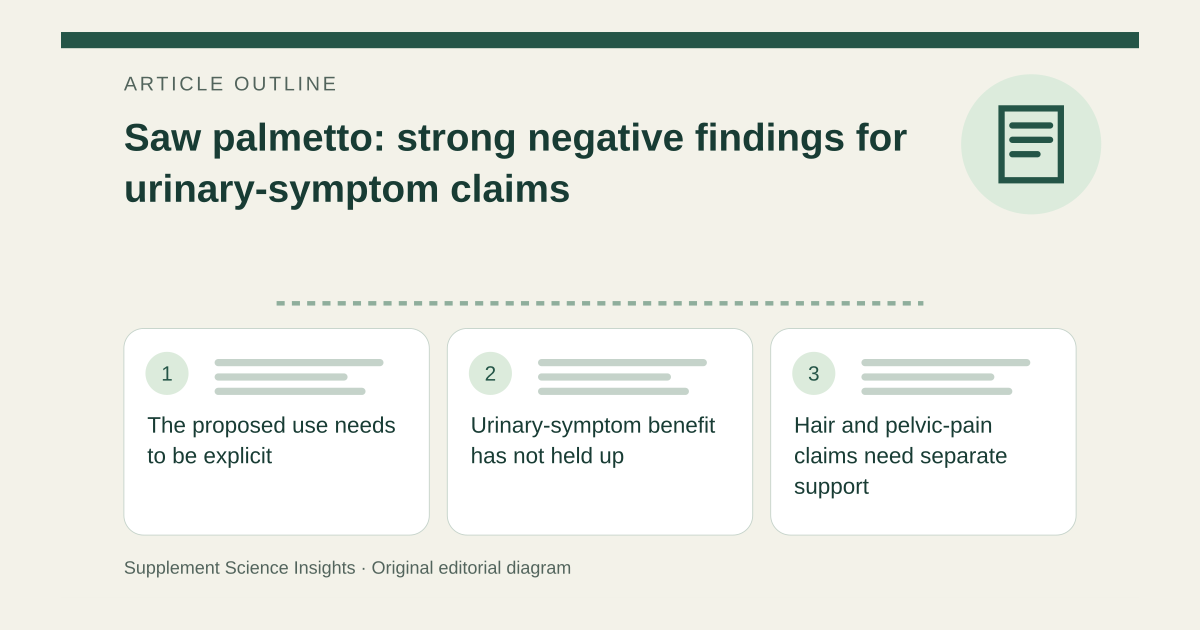
The proposed use needs to be explicit
Saw palmetto, Serenoa repens, is widely marketed for urinary symptoms associated with benign prostate enlargement. It also appears in hair products and multi-ingredient formulas. These are different uses and should not share one assumed evidence verdict. [1]
A botanical extract's method of preparation can matter, but a claimed superior method still needs supporting clinical evidence. A product description should not use extraction terminology to dismiss an unfavorable trial without showing why the study does not apply. [1]
Urinary-symptom benefit has not held up
NCCIH summarizes a large review finding little or no benefit from saw palmetto alone for symptoms associated with benign prostate enlargement. Two NIH-funded trials found no symptom improvement, including one that tested progressively higher amounts. [1]
A separate analysis did not find that hexane-extracted preparations performed differently from other preparations. This makes it inappropriate to assume that extraction language resolves the negative evidence. Findings for combinations remain uncertain because they do not isolate the effect of saw palmetto. [1]
Hair and pelvic-pain claims need separate support
Research has not established a meaningful benefit for chronic prostatitis or chronic pelvic pain syndrome. Small hair-loss studies are too limited for a dependable conclusion. An effect proposed through a hormone-related mechanism cannot substitute for these clinical findings. [1]
Urinary symptoms can also require assessment rather than a product chosen from a prostate-health category. A symptom score, urine-flow measure and underlying diagnosis are distinct pieces of information. A supplement description should not imply that improving one would establish the cause of the problem. [1]
Tolerability does not make an ineffective treatment useful
Saw palmetto is generally tolerated in research, with occasional digestive symptoms, dizziness or headache. NCCIH notes that it does not appear to change PSA readings, but that observation is not a guarantee about prostate health or a substitute for interpreting results with a clinician. [1]
Pregnancy and breastfeeding use may be unsafe. A good tolerability record should remain separate from the question of benefit. Taking more because a lower amount did not help is not justified by the trials summarized here. [1]
A blend cannot rescue an isolated-ingredient claim
Imagine a fictional trial tests saw palmetto together with two other ingredients and reports a symptom-score change. That result concerns the complete formula. It cannot identify saw palmetto as the cause or overturn negative trials of saw palmetto alone.
A comparison table should list the complete intervention and retain the uncertainty about each constituent's contribution.
| Hypothetical evidence | Valid interpretation |
|---|---|
| Three-ingredient formula | Combination tested |
| Symptom change | Individual contributor unknown |
| Saw palmetto alone | Requires its own evidence |
Negative findings are useful decision information
This overview does not recommend saw palmetto for urinary symptoms or hair loss. The most informative claim reflects the total evidence, including unsuccessful trials, and does not use popularity, a higher amount or a preparation label as a substitute for demonstrated benefit.
Sources for this article
- NCCIH — Saw palmetto: Usefulness and Safety
Source consulted: 2026-09-17. This is a reference resource, not a claim that we conducted the studies or tested a product.