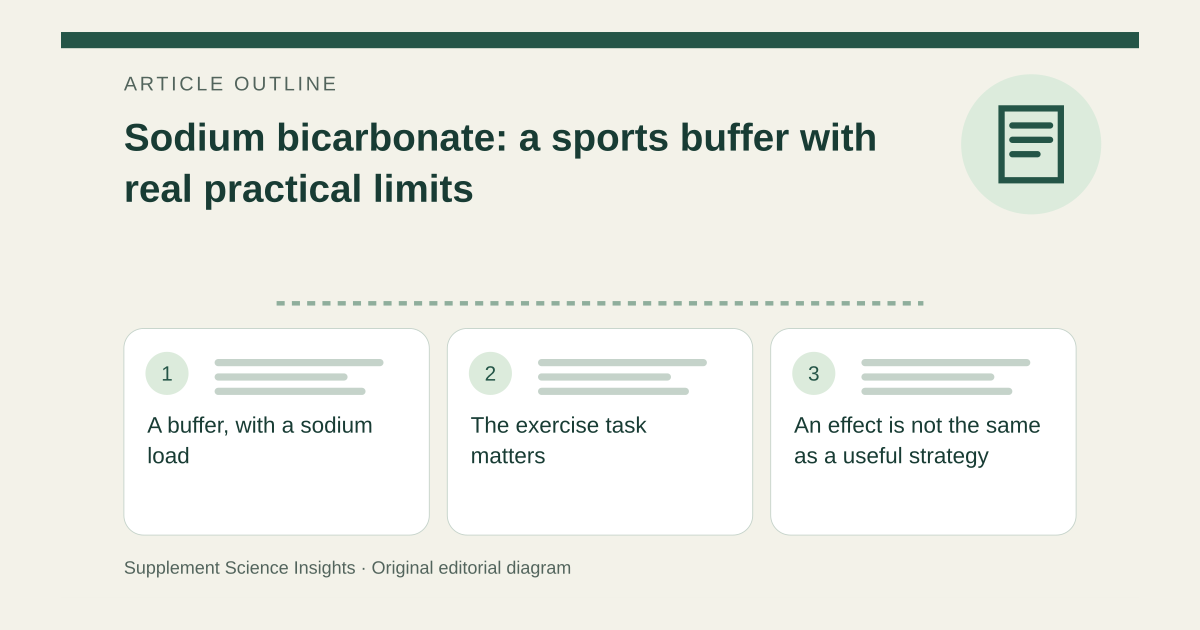
A buffer, with a sodium load
Sodium bicarbonate is also known as baking soda. Sports research examines its ability to alter acid-base conditions during intense exercise. That is a specific physiological use, not evidence that a person needs to make their whole body more alkaline for general health. [1]
The compound also supplies sodium. A discussion of exercise performance that omits the sodium content leaves out a meaningful part of the exposure, particularly for someone following a medically prescribed restriction. [1]
The exercise task matters
The NIH Office of Dietary Supplements describes possible performance benefits during certain short, intense activities, with variable responses between people and protocols. Findings do not establish a universal improvement across endurance, strength and recreational exercise. [1]
Look at the duration and intensity of the actual test and whether it involved a single effort or repeated efforts. A positive result in one kind of laboratory test should not be extended to an entire sport without supporting evidence. The preparation, timing and participants also matter. [1]
An effect is not the same as a useful strategy
A small improvement under controlled conditions may be outweighed by tolerability problems for an individual. Performance studies need to report both sides: what changed in the exercise outcome and what adverse effects participants experienced.
The familiar household name can make this ingredient seem simpler than it is. A kitchen measuring spoon is not a research protocol, and a baking instruction is not a sports-nutrition instruction. This article does not provide a home loading regimen.
Gastrointestinal effects can defeat the purpose
Nausea, abdominal discomfort, vomiting and diarrhea are important reported problems with sodium bicarbonate supplementation. ODS also emphasizes the substantial sodium exposure and uncertainty about longer-term supplemental use. These considerations matter even when a study finds a favorable performance result. [1]
People managing sodium intake or a medical condition should discuss the proposed product with their clinician. Do not combine several sodium-containing sports products without considering their total contribution. Research supervision and a retail package are not equivalent safeguards. [1]
Count sodium separately from bicarbonate
Sodium bicarbonate is approximately 27.4% sodium by mass. A hypothetical label listing 1,000 milligrams of sodium bicarbonate therefore represents about 274 milligrams of sodium from that ingredient. Two identical servings would contribute about 548 milligrams. [1]
These numbers explain the label; they are not a recommended serving or a performance protocol. Sodium from other ingredients, drinks and food would need to be counted separately. The larger compound number should never be mistaken for a sodium-free ingredient. If comparing two labels, use the same units and distinguish sodium from sodium bicarbonate before making any inference about exposure. [1]
| Hypothetical amount | Calculation | Sodium contribution |
|---|---|---|
| 1,000 mg sodium bicarbonate | 1,000 × 0.274 | 274 mg |
| Two identical servings | 274 × 2 | 548 mg |
Sources for this article
- NIH ODS — Exercise and Athletic Performance, professional fact sheet
Source consulted: 2026-09-17. This is a reference resource, not a claim that we conducted the studies or tested a product.