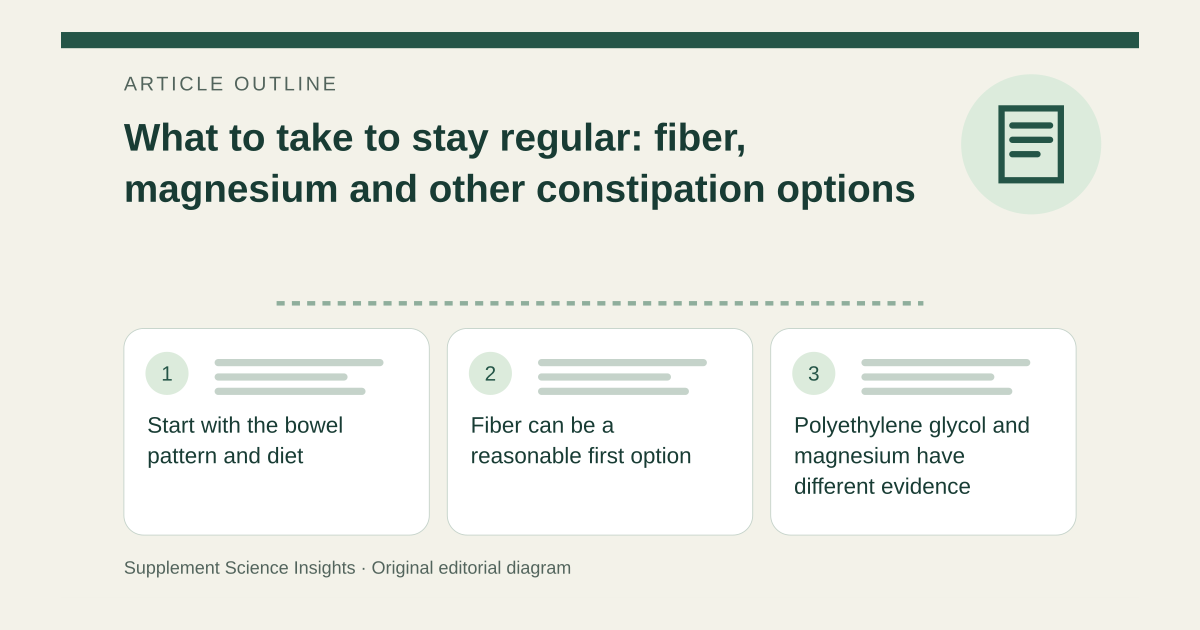
Start with the bowel pattern and diet
Consider stool consistency, straining, frequency, medicines and how long the change has lasted. Dietary fiber and appropriate fluids can help, but persistent or new concerning symptoms need assessment. A supplement should not be selected solely to force a daily bowel movement. [1][2]
Fiber can be a reasonable first option
The AGA/ACG guideline conditionally suggests fiber supplements for adult chronic idiopathic constipation, particularly when dietary fiber is low. Among evaluated products, psyllium had the clearest evidence, although certainty was limited. Adequate fluid and gradual adjustment matter, and gas can occur. [3]
Polyethylene glycol and magnesium have different evidence
The same guideline strongly recommends polyethylene glycol for adult chronic idiopathic constipation and conditionally suggests magnesium oxide with very low certainty. It advises avoiding magnesium oxide in renal insufficiency because of excess-magnesium risk. These recommendations do not mean every magnesium salt is interchangeable. [3]
Do not stack products without a plan
A person may already receive magnesium from antacids, sleep blends or multivitamins. Adding a laxative changes total exposure and can cause diarrhea. Follow the selected product instructions and seek review when ongoing use is needed or symptoms do not improve. [4][2]
Match the intervention to the problem
Imagine someone with low fiber intake starts psyllium while another has persistent constipation despite dietary changes. Their next steps may differ. Blood in stool, unexplained weight loss or persistent abdominal pain calls for assessment rather than simply adding more laxatives. [2][3]
| Option | Key consideration |
|---|---|
| Dietary fiber or psyllium | Baseline intake, fluids and tolerability |
| Polyethylene glycol | Guideline-supported osmotic option |
| Magnesium oxide | Conditional evidence and kidney caution |
| Multiple products | Check duplication and persistent symptoms |
Sources for this article
- Eating, Diet, & Nutrition for Constipation - NIDDK
Source consulted: 2026-09-21. This is a reference resource, not a claim that we conducted the studies or tested a product. - NIDDK Treatment for Constipation
Source consulted: 2026-09-21. This is a reference resource, not a claim that we conducted the studies or tested a product. - American Gastroenterological Association-American College of Gastroenterology Clinical Practice Guideline: Pharmacological Management of Chronic Idiopathic Constipation - PMC
Source consulted: 2026-09-21. This is a reference resource, not a claim that we conducted the studies or tested a product. - Magnesium - Health Professional Fact Sheet
Source consulted: 2026-09-21. This is a reference resource, not a claim that we conducted the studies or tested a product.