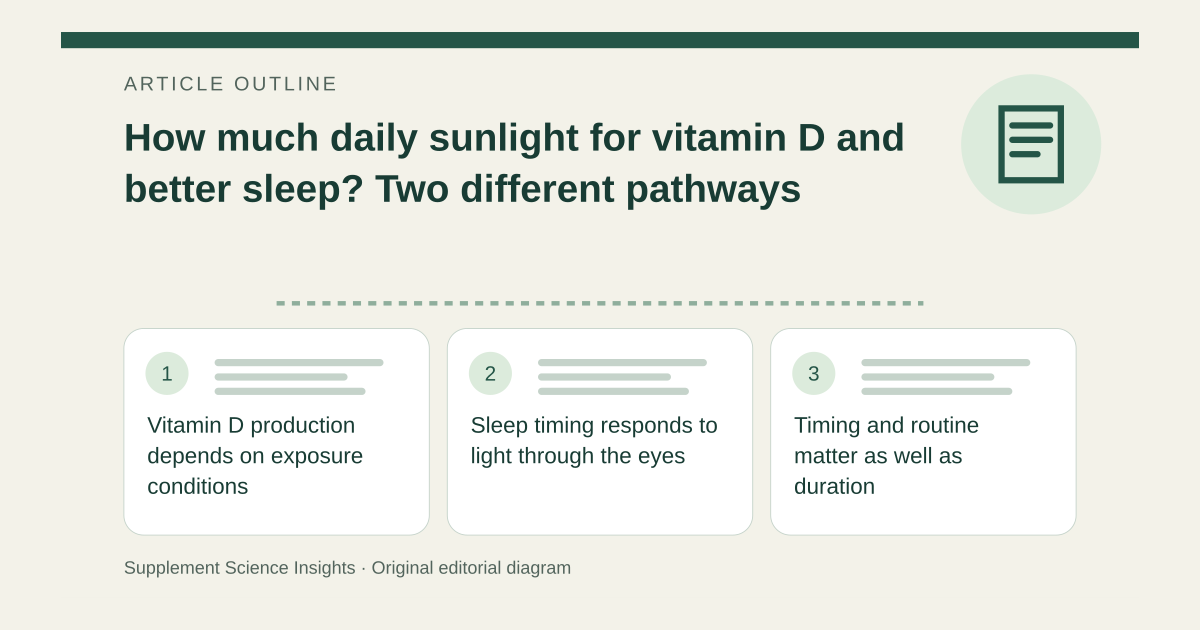
Vitamin D production depends on exposure conditions
NIH describes effects of season, time of day, latitude-related conditions, skin pigmentation, age and exposed skin. The same outdoor duration can therefore produce different amounts. Window glass blocks the UVB needed for skin synthesis, even when the room looks bright. [1]
Sleep timing responds to light through the eyes
NIGMS explains that light and darkness are major signals for the circadian system. The brain's master clock uses information about light to coordinate rhythms, including melatonin production. This process is not a measurement of vitamin D synthesis and does not require tanning the skin. [2]
Timing and routine matter as well as duration
A universal sun-minute prescription ignores differences in sleep schedules, light intensity and exposure conditions. Consistent daily habits and managing light around the sleep period are relevant to circadian timing. Persistent insomnia may need a separate assessment and treatment rather than longer sun exposure. [2][3]
Protect against UV harm
NIH emphasizes that ultraviolet radiation can damage the skin and that food and suitable supplements provide vitamin D without deliberate UV exposure. Do not look directly at the sun or use tanning equipment as a combined sleep and nutrient treatment. Sun protection remains appropriate when spending time outdoors. [1]
A useful comparison
Imagine two people take the same length morning walk, one in winter with covered skin and one in a different season. Both experience daylight, but their vitamin D production is not necessarily equal. A sleep routine and a nutritional plan should not be converted into one interchangeable minute count. [1][2]
| Goal | Relevant pathway |
|---|---|
| Vitamin D synthesis | UVB reaching skin |
| Circadian timing | Light information reaching the brain through the eyes |
| Adequate vitamin D intake | Food and supplements can contribute |
| Persistent poor sleep | Needs assessment beyond a sun-duration rule |
Sources for this article
- Vitamin D - Health Professional Fact Sheet
Source consulted: 2026-09-21. This is a reference resource, not a claim that we conducted the studies or tested a product. - Circadian Rhythms | National Institute of General Medical Sciences
Source consulted: 2026-09-21. This is a reference resource, not a claim that we conducted the studies or tested a product. - Insomnia - NHS
Source consulted: 2026-09-21. This is a reference resource, not a claim that we conducted the studies or tested a product.