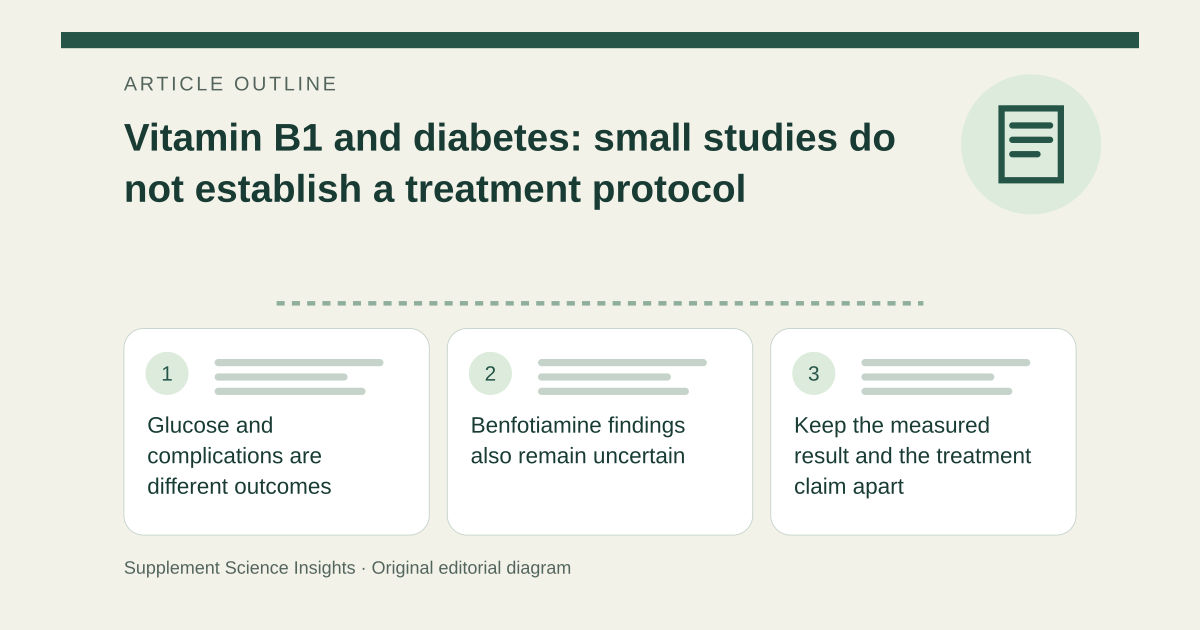
Glucose and complications are different outcomes
ODS describes small studies in which thiamin supplementation lowered glucose measurements in people with type 2 diabetes or impaired glucose tolerance. The clinical significance of those findings was not established in the reports summarized. [1]
A laboratory change is not automatically fewer complications, better daily functioning or a reason to replace prescribed treatment. The relevant study needs to measure the outcome being claimed, with an appropriate comparator and enough follow-up. [1]
Benfotiamine findings also remain uncertain
The fact sheet discusses small trials involving benfotiamine, a thiamin derivative, with mixed findings for neuropathy-related symptoms and kidney markers. Some preparations included other B vitamins. A combination result cannot identify the independent contribution of each component. [1]
ODS calls for larger, longer and well-designed studies. Its February 2023 summary is not a current comprehensive diabetes guideline. It provides no universal high-dose regimen and does not establish that everyone with diabetes has thiamin deficiency. Discuss suspected deficiency or nerve symptoms with the treating clinician. [1]
Keep the measured result and the treatment claim apart
Imagine a short trial changes a glucose measurement without tracking complications. The result may justify further research, but it does not establish long-term protection from kidney or nerve disease. The missing outcomes remain missing.
| Observation | What it establishes |
|---|---|
| Glucose measurement | Biochemical outcome |
| Neuropathy symptoms | Different clinical outcome |
| Long-term complication prevention | Requires direct evidence |
Sources for this article
- NIH ODS: Thiamin — Health Professional Fact Sheet
Source consulted: 2026-09-17. This is a reference resource, not a claim that we conducted the studies or tested a product.