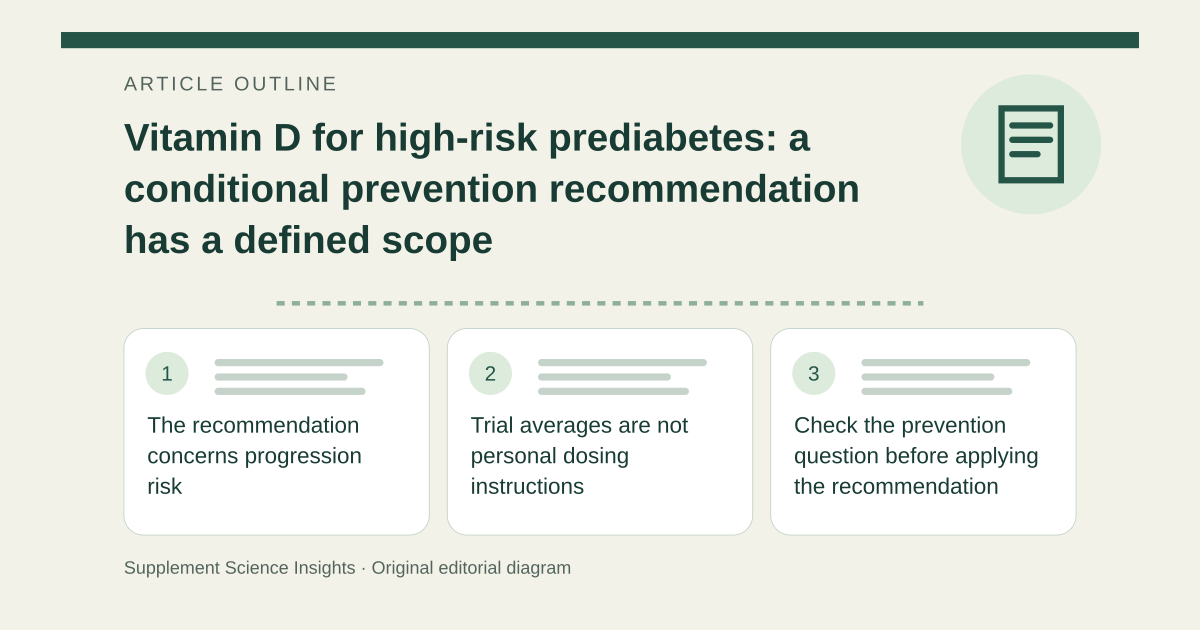
The recommendation concerns progression risk
The Endocrine Society’s 2024 guideline conditionally suggests empiric vitamin D supplementation for adults with high-risk prediabetes to reduce progression to diabetes, in addition to lifestyle modification. The conditional wording reflects the evidence and decision context; it is not an unconditional instruction for all adults. [1]
The supporting trials mainly enrolled people meeting two or three glycemic criteria for prediabetes or with impaired glucose tolerance. Those populations differ from someone with a single borderline result, normal glucose or already diagnosed diabetes. [1]
Trial averages are not personal dosing instructions
The guideline reports a wide range of daily-equivalent amounts in the trials. Its weighted average describes the research; it should not be converted automatically into a prescription. Some participants also continued routine supplements. [1]
Lifestyle modification remains a routine component of management. The recommendation does not establish vitamin D as a replacement for glucose-lowering medicines, and it does not supply a protocol for independently changing treatment. Discuss whether the actual risk profile and existing intake fit the guideline’s scope. [1]
Check the prevention question before applying the recommendation
Imagine two people have different situations: one meets the high-risk prediabetes criteria used in trials, while the other has established diabetes. Evidence about preventing progression in the first situation does not directly answer treatment in the second.
| Observation | What it establishes |
|---|---|
| High-risk prediabetes | Population addressed |
| Lifestyle modification | Retained part of care |
| Established diabetes treatment | A separate question |
Sources for this article
- Endocrine Society: Vitamin D for the Prevention of Disease
Source consulted: 2026-09-17. This is a reference resource, not a claim that we conducted the studies or tested a product.