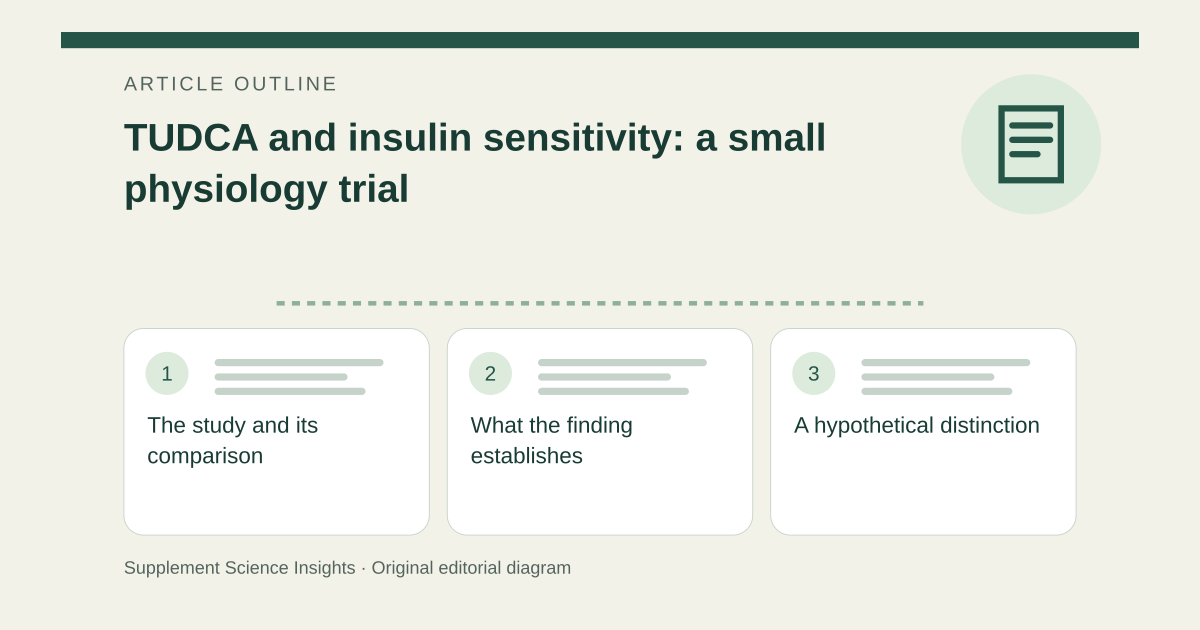
The study and its comparison
Twenty adults with obesity were randomized to TUDCA, a bile-acid derivative, or placebo. Researchers used insulin clamps, tracers and tissue sampling to examine how different tissues responded. [1]
Liver and muscle insulin sensitivity increased by roughly thirty percent after TUDCA, while the placebo group did not show that change. Selected muscle insulin-signaling measures increased. Measured stress markers in muscle and fat did not change. [1]
What the finding establishes
The short duration and small sample leave clinical outcomes unresolved. The proposed cellular mechanism was not confirmed by every measured marker. Funding and conflicts were not established from the abstract. A research amount of 1,750 milligrams daily is not a general dosing recommendation or evidence that every product works similarly. [1]
A hypothetical distinction
Imagine insulin action improves while a proposed stress marker does not. The outcome and the explanation require separate conclusions.
| Detail | Interpretation |
|---|---|
| Measured outcome | Keep the endpoint specific |
| Study preparation | Not every retail product |
| Remaining uncertainty | Not resolved by a mechanism |
Sources for this article
- Tauroursodeoxycholic Acid may improve liver and muscle but not adipose tissue insulin sensitivity in obese men and women.
Source consulted: 2026-09-19. This is a reference resource, not a claim that we conducted the studies or tested a product.