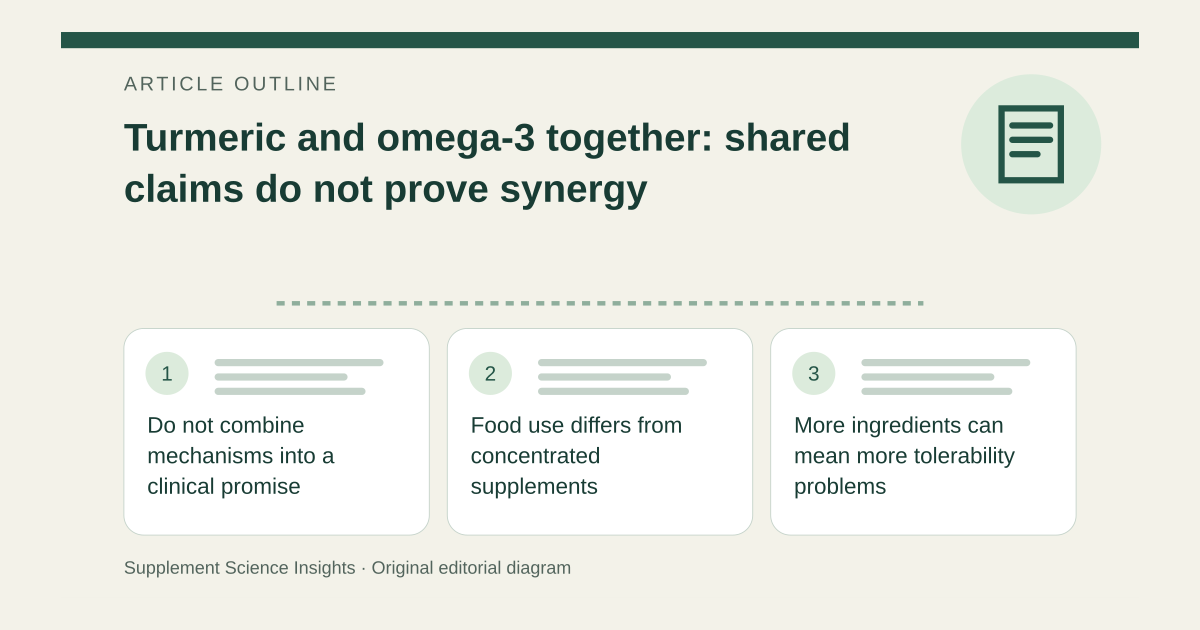
Do not combine mechanisms into a clinical promise
NIH describes omega-3 roles in inflammatory signaling, while NCCIH reports uncertainty about turmeric’s benefits across many proposed uses. Two plausible mechanisms do not establish that a combination reduces pain, swelling or medication needs more than either alone. That requires evidence on the actual combination and outcome. [1][2]
Food use differs from concentrated supplements
A meal containing fish and turmeric is not equivalent to high-dose oil capsules plus a concentrated curcumin extract. Enhanced-absorption turmeric preparations also differ from ordinary culinary spice. Keep formulation and amount attached to any evidence instead of treating the ingredient names as interchangeable. [1][2]
More ingredients can mean more tolerability problems
Fish oil can cause nausea, reflux or diarrhea, and oral turmeric can also cause gastrointestinal symptoms. NCCIH notes liver injury reports with some enhanced-bioavailability turmeric formulations. A new symptom after starting both does not identify which product caused it. [1][2]
Review medicines before using a combined routine
Omega-3 guidance highlights review with anticoagulants, and NIH advises checking supplement combinations with health professionals. Bring both labels and the medication list. Do not reduce a prescribed anti-inflammatory or disease-modifying medicine because a supplement combination sounds synergistic. [1][3]
Ask for evidence that matches the claim
Imagine a label cites a fish-oil study and a separate turmeric study to promote a blended product. Those citations may concern different patients, doses and endpoints. They cannot by themselves establish the blend’s additional benefit. [1][2]
| Question | Why it matters |
|---|---|
| Same formulation as the evidence? | Spice and enhanced extracts differ |
| Combination actually studied? | Separate studies do not prove synergy |
| Medicines and symptoms reviewed? | Risks can overlap or be difficult to attribute |
Sources for this article
- Omega-3 Fatty Acids - Health Professional Fact Sheet
Source consulted: 2026-09-21. This is a reference resource, not a claim that we conducted the studies or tested a product. - Turmeric: Usefulness and Safety | NCCIH
Source consulted: 2026-09-21. This is a reference resource, not a claim that we conducted the studies or tested a product. - Dietary Supplements: What You Need to Know
Source consulted: 2026-09-21. This is a reference resource, not a claim that we conducted the studies or tested a product.