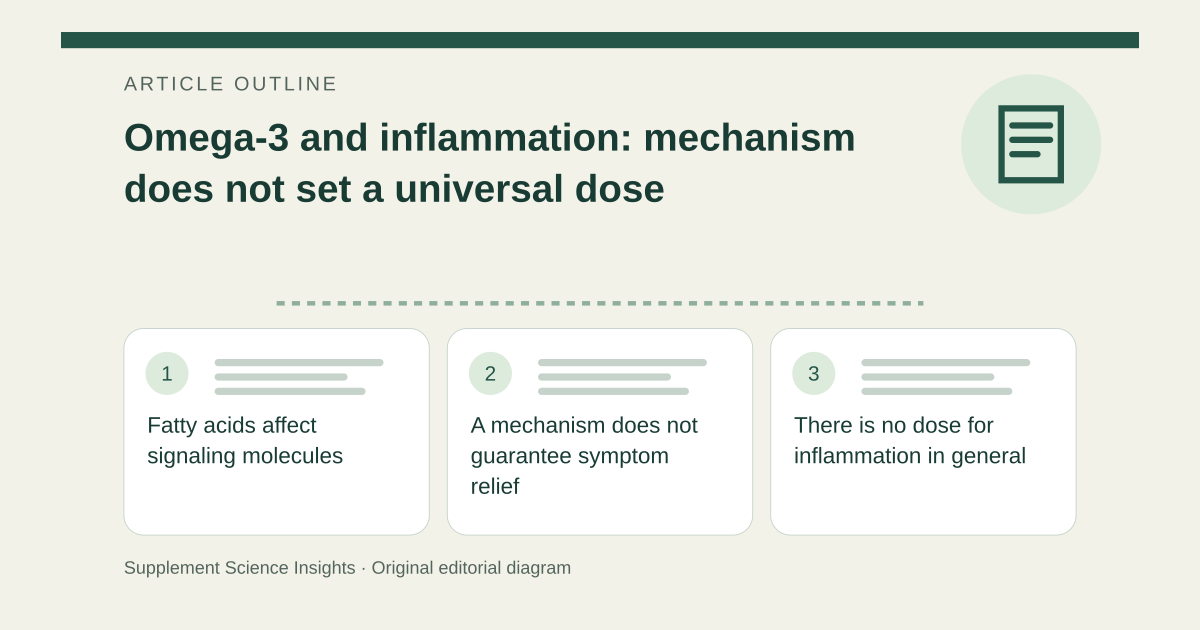
Fatty acids affect signaling molecules
NIH describes how omega-3 and omega-6 fatty acids contribute to signaling compounds involved in immune, vascular and other functions. EPA and DHA can shift the balance of some mediators toward less inflammatory activity. This is more nuanced than treating every omega-6 fat as harmful or every inflammatory response as something to eliminate. [1]
A mechanism does not guarantee symptom relief
Rheumatoid arthritis is one studied example. The NIH synthesis describes reduced use of anti-inflammatory medicines in some research but inconsistent changes in painful joints, swelling and morning stiffness. This is summary-level evidence, not an independently appraised new trial or proof that supplements replace disease-modifying treatment. [1]
There is no dose for inflammation in general
A swollen joint, inflammatory bowel disease, an infection and an exercise-related symptom are different problems. A dose used in one study cannot be transferred to all of them. Determine the condition and treatment goal before choosing a supplement, and distinguish total oil from the EPA and DHA it provides. [1]
High doses still have tradeoffs
Gastrointestinal effects, medication considerations and atrial-fibrillation signals in some high-dose trials remain relevant even when the aim is inflammation control. Review use with the treating clinician rather than increasing the dose until a symptom changes. Persistent or unexplained inflammation needs diagnosis. [1][2]
Define a useful outcome
Imagine a product says it supports a healthy inflammatory response. That statement does not tell someone with joint pain whether walking, swelling or medication needs will improve. Evidence becomes useful only when the formulation, condition and measured outcome match the question. [1]
| Claim detail | Required distinction |
|---|---|
| Biochemical pathway | Not automatically symptom relief |
| Study dose | Condition and formulation specific |
| Less medication in a study | Not permission to stop prescribed treatment |
Sources for this article
- Omega-3 Fatty Acids - Health Professional Fact Sheet
Source consulted: 2026-09-21. This is a reference resource, not a claim that we conducted the studies or tested a product. - Dietary Supplements: What You Need to Know
Source consulted: 2026-09-21. This is a reference resource, not a claim that we conducted the studies or tested a product.