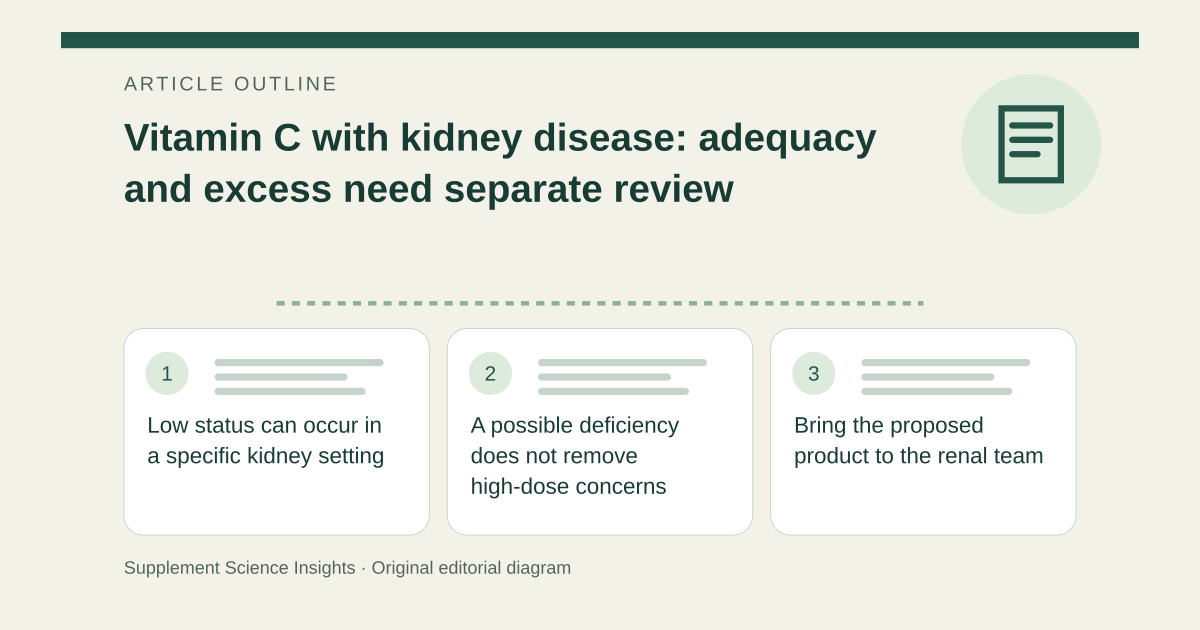
Low status can occur in a specific kidney setting
ODS notes that low vitamin C concentrations can occur in people with end-stage renal disease receiving chronic hemodialysis. That observation identifies a group in whom nutritional status may need attention. [1]
It does not mean that all stages of kidney disease require the same supplement or that a low concentration supplies an automatic dose. The current treatment, intake and laboratory context belong in the assessment. [1]
A possible deficiency does not remove high-dose concerns
High vitamin C intake can increase urinary oxalate in some circumstances, with particular concern in people who already have hyperoxaluria. ODS also identifies renal disorders as relevant when considering potential stone formation. [1]
These are separate considerations: inadequate status may need correction, while excessive intake may introduce a problem. Treating one concern as proof that the other cannot exist would oversimplify the decision. [1]
Bring the proposed product to the renal team
Imagine someone receiving dialysis hears that vitamin C can be low and buys the strongest available tablet. The reported risk of inadequacy does not establish that this formulation or amount is suitable.
A useful discussion includes the exact label, current renal supplements, usual intake and the reason extra vitamin C is being considered. That lets the team assess the proposed change within the existing plan.
| Detail | Meaning |
|---|---|
| Dialysis and current supplements | Identify the treatment context |
| Concern about low status | Needs assessment, not automatic escalation |
| High-dose product | Requires a separate suitability review |
Healthy-person limits are not a renal prescription
A general upper intake limit does not define a therapeutic dose or guarantee suitability in kidney disease. Avoid assuming that a freely available vitamin is independent of the renal care plan. [1]
This article identifies issues supported by the ODS synthesis. It does not supply a dialysis dose, laboratory target or monitoring interval; those require individualized clinical guidance. [1]
Sources for this article
- NIH ODS — Vitamin C: Health Professional Fact Sheet
Source consulted: 2026-09-17. This is a reference resource, not a claim that we conducted the studies or tested a product.