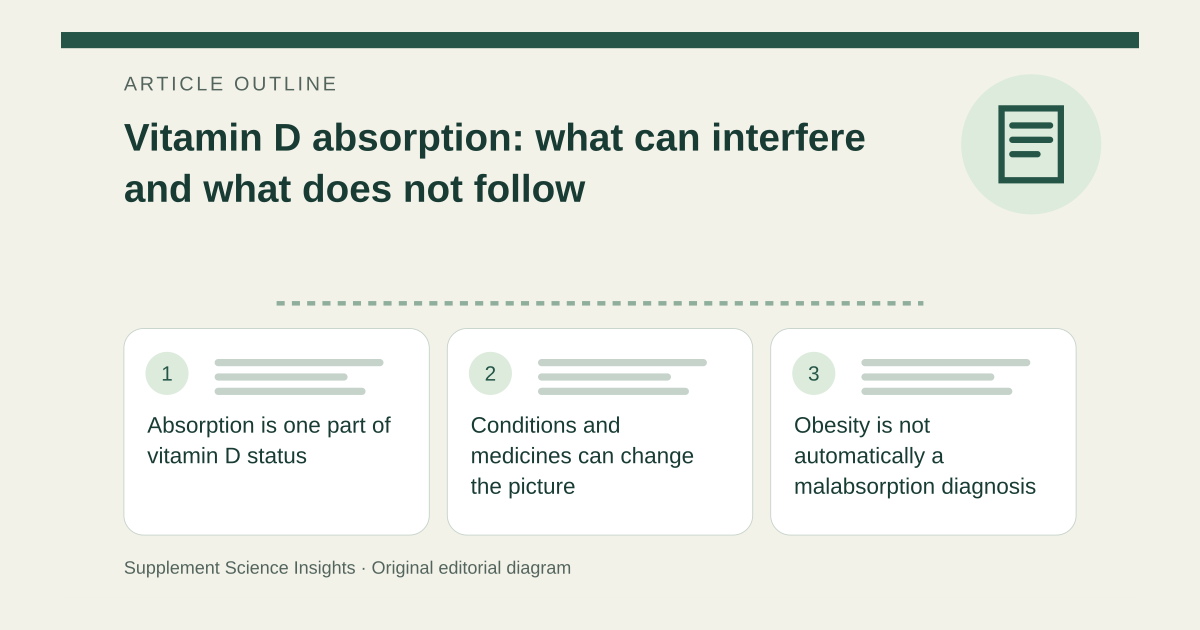
Absorption is one part of vitamin D status
Vitamin D from food or supplements must pass from the digestive tract into the body. NIH ODS explains that both D2 and D3 are absorbed in the small intestine. Dietary fat can enhance absorption, but some vitamin D is absorbed even without fat. A meal without added oil does not make a dose disappear. [1]
A low blood vitamin D result can have several explanations, including limited intake, limited skin production and altered handling in the body. It cannot by itself diagnose intestinal malabsorption. Distinguishing those possibilities matters more than searching for one food that supposedly “cancels out” vitamin D. [1]
Conditions and medicines can change the picture
Conditions associated with fat malabsorption, including celiac disease, cystic fibrosis and some liver or inflammatory bowel diseases, can make vitamin D uptake less reliable. Gastric bypass surgery can also change absorption by bypassing part of the small intestine. These circumstances need a clinical plan rather than a generic meal-timing tip. [1]
Orlistat can reduce vitamin D absorption from food and supplements. Tell the prescriber or pharmacist about vitamin products so they can review the specific instructions. This does not mean every weight-loss medicine has the same effect. [1]
Obesity is not automatically a malabsorption diagnosis
ODS notes that people with obesity often have lower circulating 25-hydroxyvitamin D, but obesity itself does not reduce intestinal vitamin D absorption. Distribution into a larger amount of body fat and other factors are different from failure to absorb a swallowed dose. [1]
Similarly, aging affects skin production of vitamin D without necessarily reducing absorption from the intestine. Avoid turning a risk factor for a low level into a claim about a mechanism that was not measured. [1]
Separate an amount from a response
Imagine two adults take the same labeled vitamin D amount. One has a history of gastric bypass and the other does not. Different follow-up blood results would not prove that one brand is defective. Surgery, baseline status, actual use and other factors need to be considered before attributing the difference to the product.
| Observation | Meaning |
|---|---|
| Same daily label amount | Does not guarantee the same blood response |
| History of gastric bypass | Relevant to assessment of absorption |
| Low result despite supplementation | Review use and possible causes before increasing intake |
Do not compensate with an unmonitored high dose
Someone with suspected malabsorption may need individualized supplementation and monitoring. Increasing the amount repeatedly without understanding the cause can create a new risk, because excessive vitamin D can raise blood calcium and harm the kidneys. Bring the operation history, medicines and actual product amounts to the clinician. [1]
This page explains recognized absorption issues from the ODS synthesis. It does not establish a universal fat requirement, timing interval or replacement dose. [1]
Sources for this article
- NIH ODS — Vitamin D: Health Professional Fact Sheet
Source consulted: 2026-09-17. This is a reference resource, not a claim that we conducted the studies or tested a product.