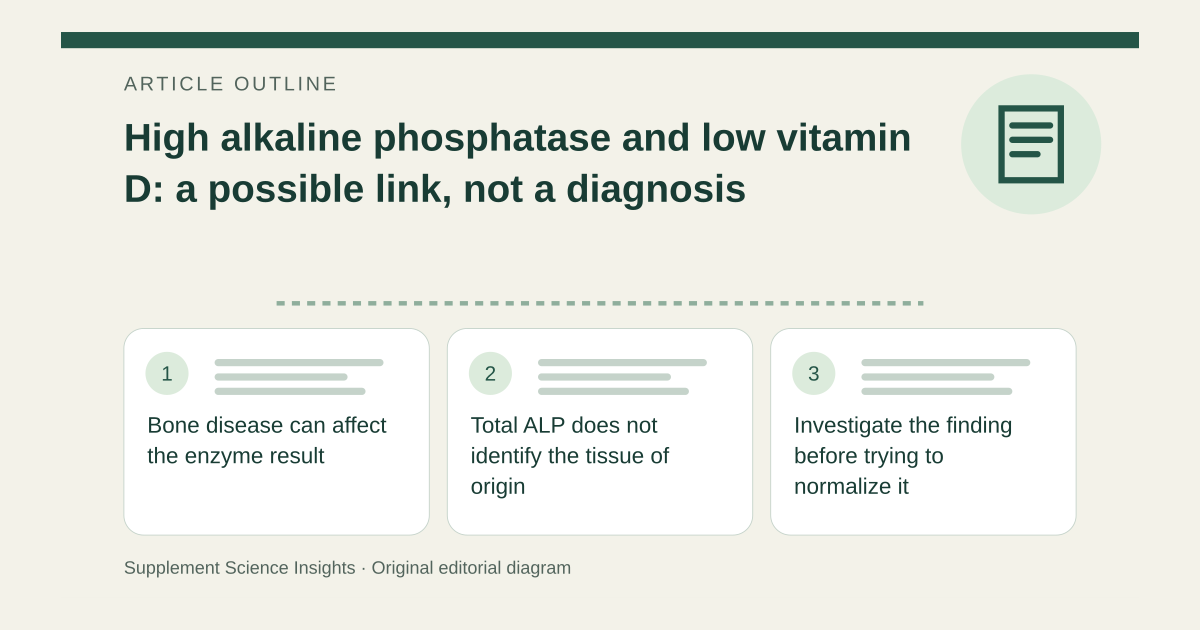
Bone disease can affect the enzyme result
Vitamin D deficiency can cause osteomalacia in adults, a disorder of bone mineralization. The cited NHS educational guidance describes a pattern that can include increased alkaline phosphatase alongside other mineral changes. [1][2]
This is a possible clinical connection, not a statement that every mildly low vitamin D value produces high ALP or that every high ALP result is caused by vitamin D deficiency. [1][2]
Total ALP does not identify the tissue of origin
MedlinePlus explains that substantial ALP activity comes from the liver, bile ducts and bones. A total blood result cannot by itself distinguish the source. Follow-up may include liver-related tests or ALP isoenzyme testing when appropriate and available. [1][2]
Pregnancy and bone growth in children and adolescents can also raise ALP without the same disease interpretation used in a nonpregnant adult. Age, symptoms and the laboratory context matter. [1][2]
Investigate the finding before trying to normalize it
A clinician may assess vitamin D and other mineral measures when the pattern suggests a bone-related cause. That differs from taking a large vitamin D dose simply because ALP is high. Treating an assumed deficiency can miss a liver or other explanation. [1][2]
The NHS page is used here for the biological association; its 2023 review date is not presented as a new treatment protocol. The laboratory interpretation comes from the linked MedlinePlus overview. [1][2]
One abnormal enzyme can have different explanations
Imagine two people have elevated ALP: one has a bone-mineral disorder and the other a bile-duct problem. The shared result does not make vitamin D the treatment for both. Additional evidence identifies the relevant pathway.
| Detail | Interpretation |
|---|---|
| ALP result | An enzyme measurement |
| Vitamin D status | A separate assessment |
| Tissue source | May need further tests |
Sources for this article
- MedlinePlus: Alkaline phosphatase test
Source consulted: 2026-09-17. This is a reference resource, not a claim that we conducted the studies or tested a product. - NHS Right Decisions: Vitamin D — diagnostic education
Source consulted: 2026-09-17. This is a reference resource, not a claim that we conducted the studies or tested a product.