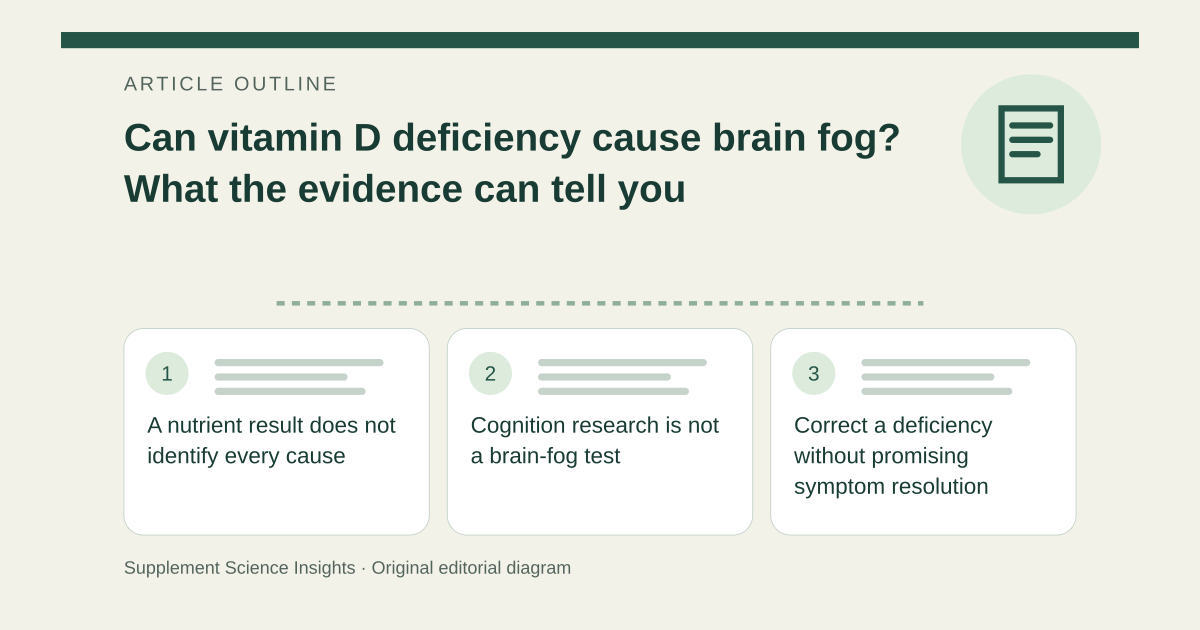
A nutrient result does not identify every cause
NIH describes vitamin D deficiency primarily through its effects on bone and mineral metabolism. A low level can coexist with concentration problems, but a blood result alone does not demonstrate that it caused them. The pattern, timing, medicines and other symptoms matter when deciding what needs evaluation. [1][2]
Cognition research is not a brain-fog test
A 2026 systematic review pooled nine randomized trials in adults aged 60 or older. It reported benefits in global cognition and some domains, while attention, executive function and processing speed did not improve significantly overall. The authors called for further trials. These findings do not establish a treatment for nonspecific brain fog in every age group. [3]
Correct a deficiency without promising symptom resolution
Treating an established deficiency can be appropriate even if the concentration problem has another explanation. There is no universal brain-fog dose supported by the inspected sources. Excess vitamin D can itself cause hypercalcemia, with symptoms that may include neuropsychiatric disturbance. More is not automatically better. [1]
Sudden confusion is a different situation
NHS advises immediate medical help for sudden confusion because possible causes include infection, stroke, low blood sugar and medication effects. Do not wait for a vitamin test or supplement response. Gradually worsening memory or confusion also warrants assessment rather than assuming a nutritional cause. [2]
Apply the evidence to the right question
Imagine a younger adult with poor sleep calls their concentration problem brain fog after seeing a cognitive study in older adults. That study cannot diagnose their cause or select a dose. A symptom history and appropriate clinical assessment are more useful than treating the study headline as a prescription. [3][2]
| Situation | Interpretation |
|---|---|
| Low D plus poor concentration | Coexistence does not prove causation |
| Older-adult cognition trial | Limited population and measured domains |
| Persistent gradual problems | Arrange assessment |
| Sudden confusion | Seek immediate medical help |
Sources for this article
- Vitamin D - Health Professional Fact Sheet
Source consulted: 2026-09-21. This is a reference resource, not a claim that we conducted the studies or tested a product. - Sudden confusion (delirium) - NHS
Source consulted: 2026-09-21. This is a reference resource, not a claim that we conducted the studies or tested a product. - Effects of Vitamin D Supplementation on Cognitive Function in Older Adults: A Grading of Recommendations Assessment, Development, and Evaluation (GRADE) Methodology-Assessed Systematic Review and Meta-Analysis of Randomized Clinical Trials.
Source consulted: 2026-09-21. This is a reference resource, not a claim that we conducted the studies or tested a product.