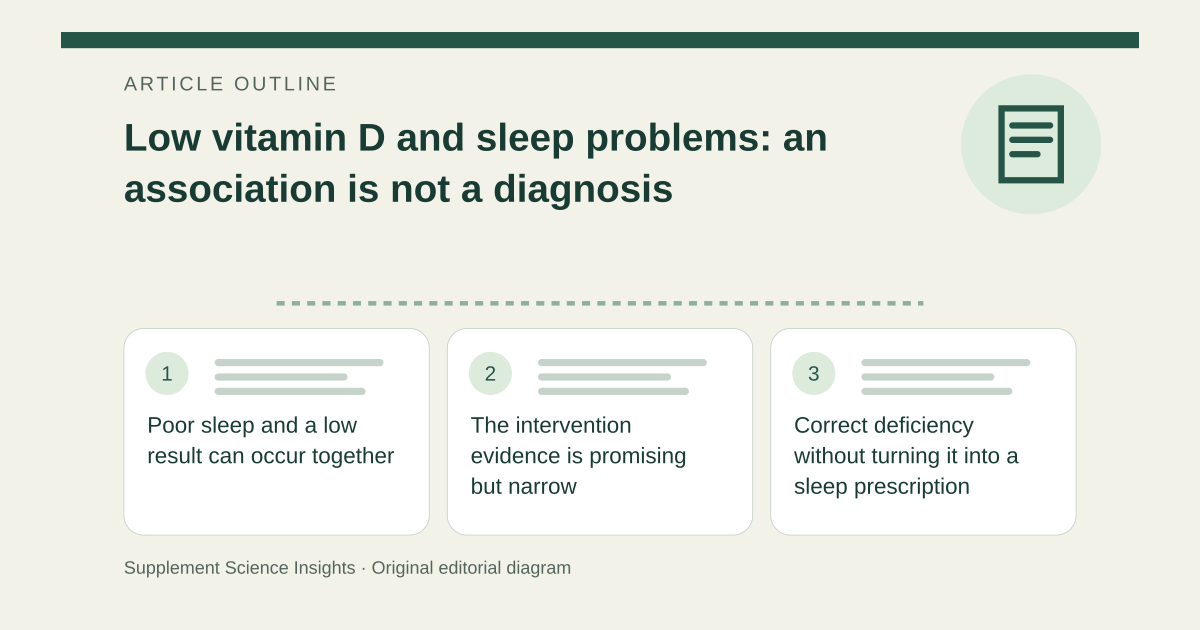
Poor sleep and a low result can occur together
Observational links cannot by themselves establish which came first or rule out other influences. The 2022 review discusses sunlight exposure and other plausible connections, but a biological explanation is not proof that deficiency caused an individual’s insomnia. [1]
The intervention evidence is promising but narrow
The review included 19 intervention studies, with only three randomized trials in its pooled sleep-quality analysis. That analysis favored vitamin D over placebo on a questionnaire score. Evidence for sleep duration, daytime sleepiness and particular disorders was limited or inconsistent. A better score is not proof that sleep apnea or chronic insomnia has been treated. [1]
Correct deficiency without turning it into a sleep prescription
Vitamin D deficiency deserves appropriate care for established health reasons, including bone and muscle effects. The sleep review does not identify one dose, target blood level or dosing time that reliably treats everyone’s sleep symptoms. More vitamin D is not necessarily better, and excessive supplementation can be toxic. [2][1]
Address the sleep problem directly
NHS identifies stress, medicines, caffeine and other health conditions among insomnia contributors. Regular habits and, when appropriate, cognitive behavioral therapy have their own roles. Persistent poor sleep or significant daytime impairment should be assessed even when a vitamin D result is low. [3]
Track two separate outcomes
Imagine deficiency treatment raises a blood result but sleep remains disrupted. That does not mean the dose should automatically rise again. Follow the nutrient treatment plan and reassess sleep separately, using symptoms and daytime function as well as laboratory information. [2][3]
| Outcome | What it tells you |
|---|---|
| Vitamin D result | Nutrient status in context |
| Sleep quality | A separate symptom outcome |
| Persistent insomnia | Needs its own assessment |
| Higher supplement dose | Not automatically a better sleep treatment |
Sources for this article
- Vitamin D Supplementation and Sleep: A Systematic Review and Meta-Analysis of Intervention Studies - PMC
Source consulted: 2026-09-21. This is a reference resource, not a claim that we conducted the studies or tested a product. - Vitamin D - Health Professional Fact Sheet
Source consulted: 2026-09-21. This is a reference resource, not a claim that we conducted the studies or tested a product. - Insomnia - NHS
Source consulted: 2026-09-21. This is a reference resource, not a claim that we conducted the studies or tested a product.