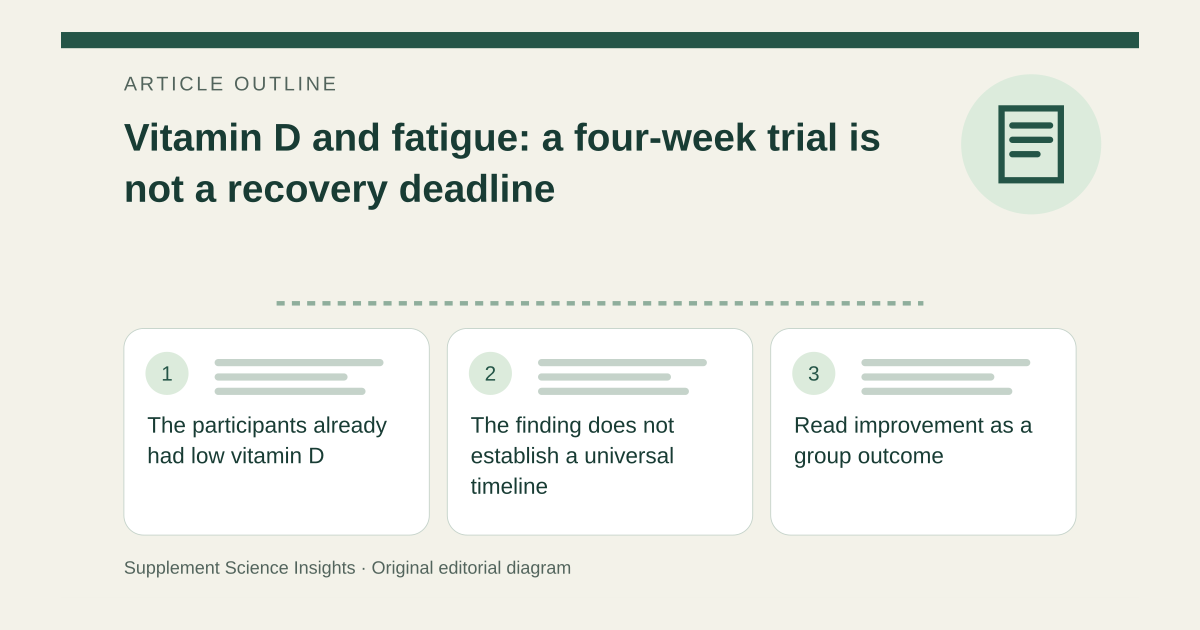
The participants already had low vitamin D
The trial enrolled 120 adults reporting fatigue, with an average age of 29 years and serum 25-hydroxyvitamin D below 20 ng/mL. Participants received a single oral vitamin D3 dose or placebo under double-blind conditions. [1]
At four weeks, the average fatigue score fell by 3.3 points with vitamin D and 0.8 points with placebo. Improvement was reported by 72% and 50%, respectively. Improvement in the placebo group is one reason an uncontrolled before-and-after story can be misleading. [1]
The finding does not establish a universal timeline
These were selected, otherwise healthy participants. The result does not establish that vitamin D treats all fatigue, chronic fatigue syndrome, or tiredness in people whose vitamin D is already adequate. Four weeks was the measurement point, not a guarantee of recovery by that day. [1]
The study was partly supported by the EMDO Foundation; the authors reported no conflicts and stated that the funder had no role in the research. Its short follow-up cannot establish lasting benefit or the best maintenance regimen. [1]
Read improvement as a group outcome
Imagine fatigue improves after starting a supplement. This trial makes a benefit plausible in a similar deficient population, but the individual change alone cannot identify its cause or exclude another reason for fatigue.
| Detail | Interpretation |
|---|---|
| 120 participants | Selected deficient population |
| Four weeks | Measured endpoint |
| Improvement | Also occurred with placebo |
Sources for this article
- Effect of vitamin D3 on self-perceived fatigue: A double-blind randomized placebo-controlled trial - PMC
Source consulted: 2026-09-19. This is a reference resource, not a claim that we conducted the studies or tested a product.