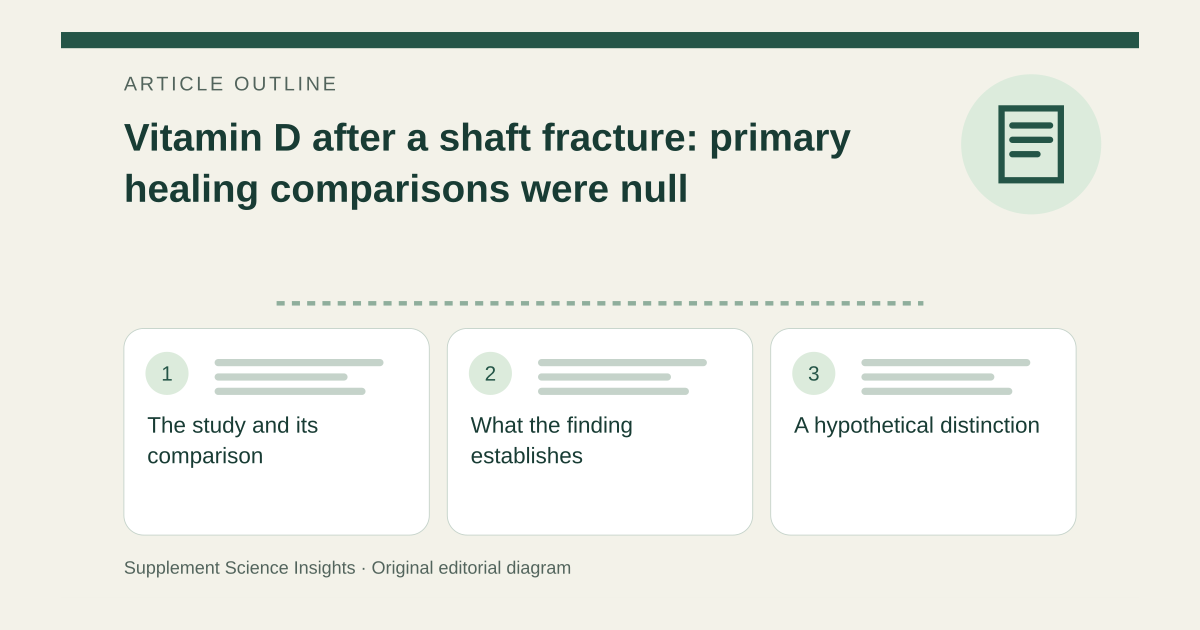
The study and its comparison
One hundred two adults with surgically treated tibial or femoral shaft fractures entered four vitamin D or placebo groups. Fifty-six percent were deficient initially, and ninety-nine were assessed at three months. [1]
Prespecified clinical and radiographic healing comparisons did not show important or statistically significant differences. A later exploratory comparison suggested a possible high-dose signal, reported with 80-percent confidence intervals and P values above 0.05. [1]
What the finding establishes
An exploratory signal is not confirmation that a fracture will heal faster. The study was small and involved specific injuries and surgery; its dosing arms should not become a self-treatment plan. Disclosures included orthopedic industry relationships; full funding was not established from the abstract. [1]
A hypothetical distinction
Imagine an exploratory analysis uses a less stringent interval after primary comparisons are null. It supports another study, not a confirmed treatment claim.
| Detail | Interpretation |
|---|---|
| Measured outcome | Keep the endpoint specific |
| Study preparation | Not every retail product |
| Remaining uncertainty | Not resolved by a mechanism |
Sources for this article
- Effect of Vitamin D 3 Supplementation on Acute Fracture Healing: A Phase II Screening Randomized Double-Blind Controlled Trial.
Source consulted: 2026-09-19. This is a reference resource, not a claim that we conducted the studies or tested a product.