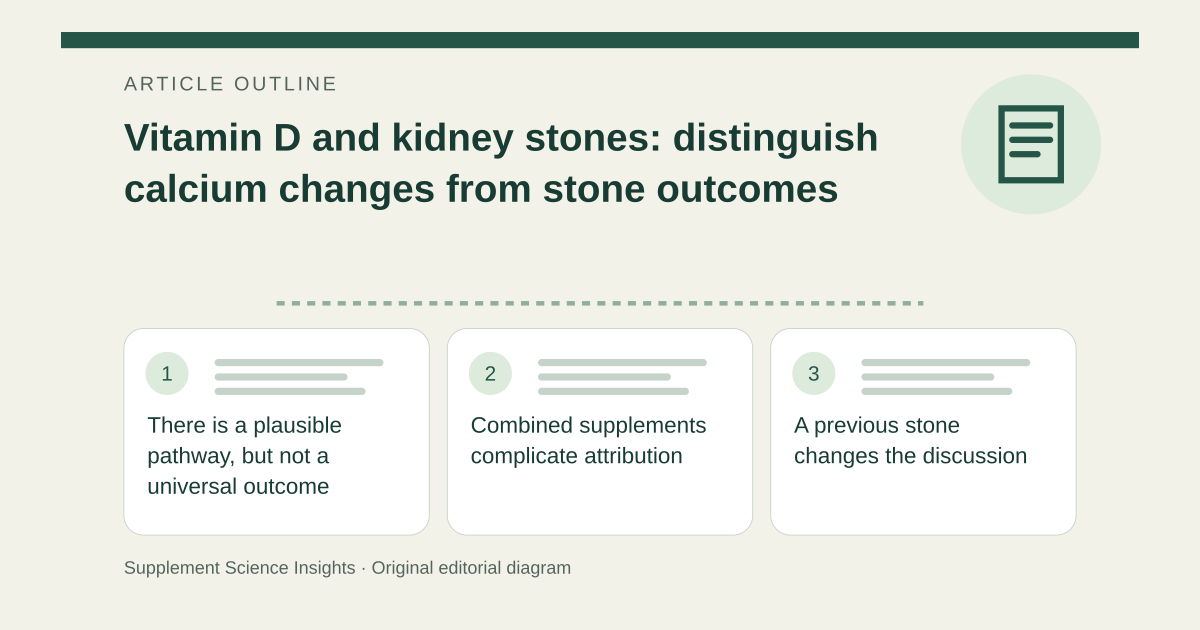
There is a plausible pathway, but not a universal outcome
Vitamin D increases intestinal calcium absorption. Excessive intake can produce high blood calcium and high urine calcium, and kidney stones are among possible consequences of toxicity. That does not mean every ordinary vitamin D dose causes stones. [1]
A blood calcium result, a urine calcium measurement and a new symptomatic stone are different outcomes. Evidence about one should not be presented as though it directly measured all three. [1]
Combined supplements complicate attribution
NIH ODS describes a large trial in postmenopausal women in which combined calcium and vitamin D supplementation increased stone risk. Because participants received both nutrients, the result cannot be assigned to vitamin D alone. [1]
ODS also summarizes other trials of vitamin D alone or with calcium that found more hypercalcemia or hypercalciuria without a clear increase in stones. Differences in populations, accompanying calcium, duration and outcomes help explain why one simple yes-or-no statement loses important information. This is a summary of the agency’s evidence review, not an independent reanalysis of those trials. [1]
A previous stone changes the discussion
A person with a stone history should bring that history, current supplement amounts and the reason for vitamin D use to the treating clinician. The relevant question is how to meet a nutritional or treatment need in that context, not whether vitamin D is universally forbidden. [1]
The calcium supplied by a combination tablet is part of the exposure. Do not review only the vitamin D number while ignoring a second active ingredient that may matter to the evidence being cited. [1]
Do not split a combination trial into separate promises
Imagine a report says a calcium-plus-vitamin-D regimen changed stone incidence. One advertisement claims this proves all vitamin D is dangerous; another says it is irrelevant because its product contains less calcium. Neither conclusion can be established from the combination result alone.
The useful comparison retains both nutrient amounts, participant characteristics and follow-up duration, then asks whether those conditions resemble the proposed use.
| Observation | Meaning |
|---|---|
| Higher urine calcium | A risk-related marker, not a documented stone |
| More stones with a combined regimen | Cannot isolate vitamin D from calcium |
| Different retail formulation | Needs its own relevant evidence |
Avoid treating the risk as a reason for self-directed restriction
Do not use this page to stop prescribed treatment or sharply restrict dietary calcium. Those decisions require the cause of the stone and the wider clinical context. Equally, do not take high-dose vitamin D on the assumption that an absence of previous stones guarantees safety. [1]
If excessive intake is suspected with marked thirst, frequent urination, weakness or vomiting, seek medical advice. ODS links these symptoms to possible hypercalcemia, but clinical assessment is needed because the symptoms are not specific. [1]
Sources for this article
- NIH ODS — Vitamin D: Health Professional Fact Sheet
Source consulted: 2026-09-17. This is a reference resource, not a claim that we conducted the studies or tested a product.