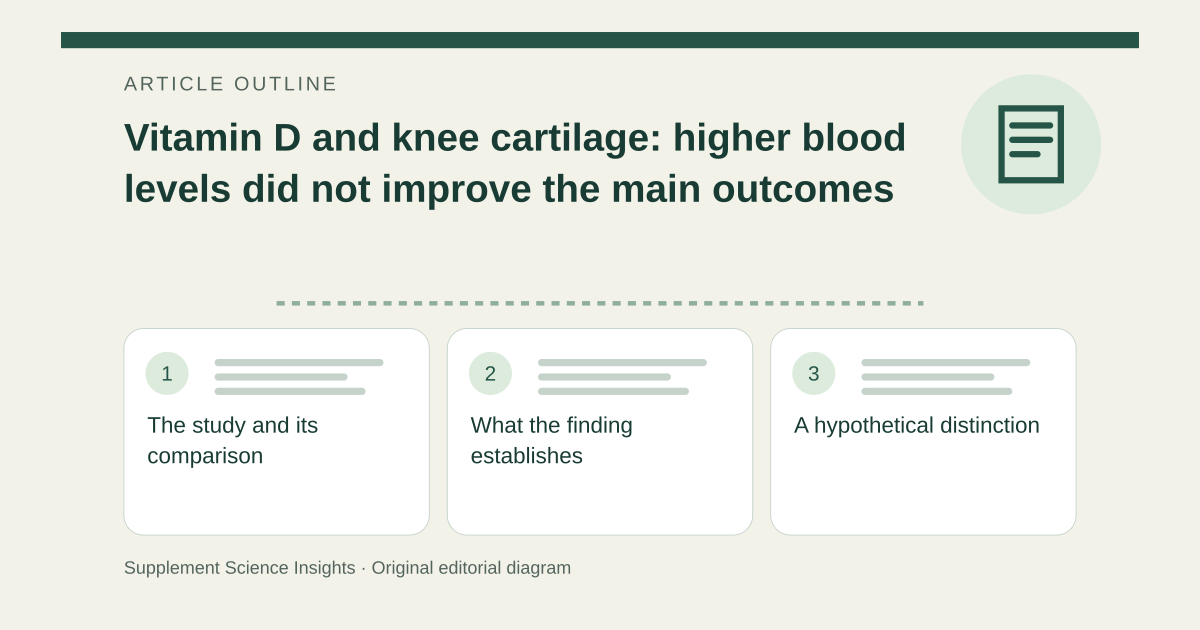
The study and its comparison
Four hundred thirteen adults with symptomatic knee osteoarthritis and low vitamin D were randomized to vitamin D3 50,000 IU monthly or placebo for two years. Three hundred forty completed follow-up. [1]
Blood vitamin D rose more with supplementation, but MRI cartilage-volume change and WOMAC pain did not significantly differ. At least one adverse event was reported more often in the vitamin D group. [1]
What the finding establishes
The result does not establish a treatment for knee osteoarthritis from raising this blood marker. It also does not remove other reasons to treat diagnosed deficiency. Funding and conflicts were not established from the abstract; the trial schedule is not a personal dosing instruction. [1]
A hypothetical distinction
Imagine a laboratory target improves while pain and imaging do not. The laboratory response is not a substitute for those outcomes.
| Detail | Interpretation |
|---|---|
| Measured outcome | Keep the endpoint specific |
| Study preparation | Not every retail product |
| Remaining uncertainty | Not resolved by a mechanism |
Sources for this article
- Effect of Vitamin D Supplementation on Tibial Cartilage Volume and Knee Pain Among Patients With Symptomatic Knee Osteoarthritis: A Randomized Clinical Trial.
Source consulted: 2026-09-19. This is a reference resource, not a claim that we conducted the studies or tested a product.